M.O.O.R. — Gianluca Balocco. Abandon Sight
05.11.2026 – 05.12.2026
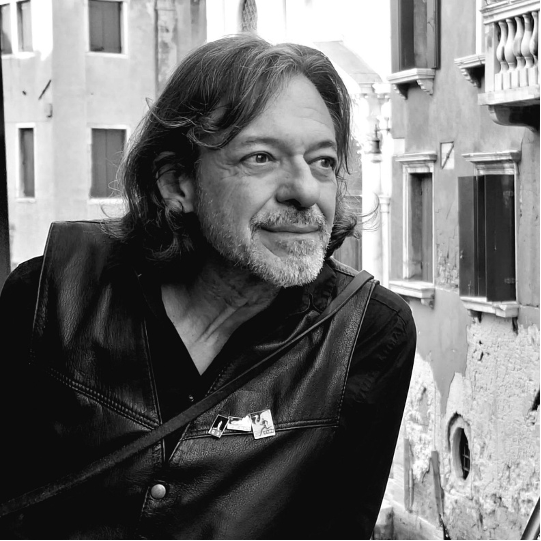
From November 5th to December 5th, 2026, BUILDING TERZO PIANO presents Abandon Sight, a solo exhibition by M.O.O.R. — Gianluca Balocco (Verona, 1964), curated by Serena Tabacchi. Through a single installation, comprising works in various media – trans-pictorial works derived from systematic photographic archives, chromographs, light installations, videos, sculptures and interperceptual works – Balocco explores perception as an experience of suspension, loss of orientation and the transformation of visual consciousness.
The study of the ancient tapestries and carpets from the Moshe Tabibnia Collection – housed at the Gallery Moshe Tabibnia in Milan – forms the starting point, the generative matrix of the installation. The artist explores this pre-existing heritage not merely as a decorative repertoire, but as a field of memory, a ritual surface and an archive of matter through which to construct new ways of seeing. In the weaves, symmetries, abrasions and shades of the fabrics, recognises a dual nature: image and body, ornament and geography, function and threshold.
It is from this heritage that the artist develops “Neural Thrill”, an approach to his artistic practice based on the perceptual reactivation of pre-existing images and memories.
At BUILDING TERZO PIANO, this research takes the form of an exhibition project conceived specifically for the gallery’s spaces. Image, light, video, sound, olfactory elements and interperceptual works combine to create a dramaturgy of perception, giving rise to a cohesive experience in which the different artistic languages engage in dialogue with one another, whilst retaining the distinct character of each individual work.
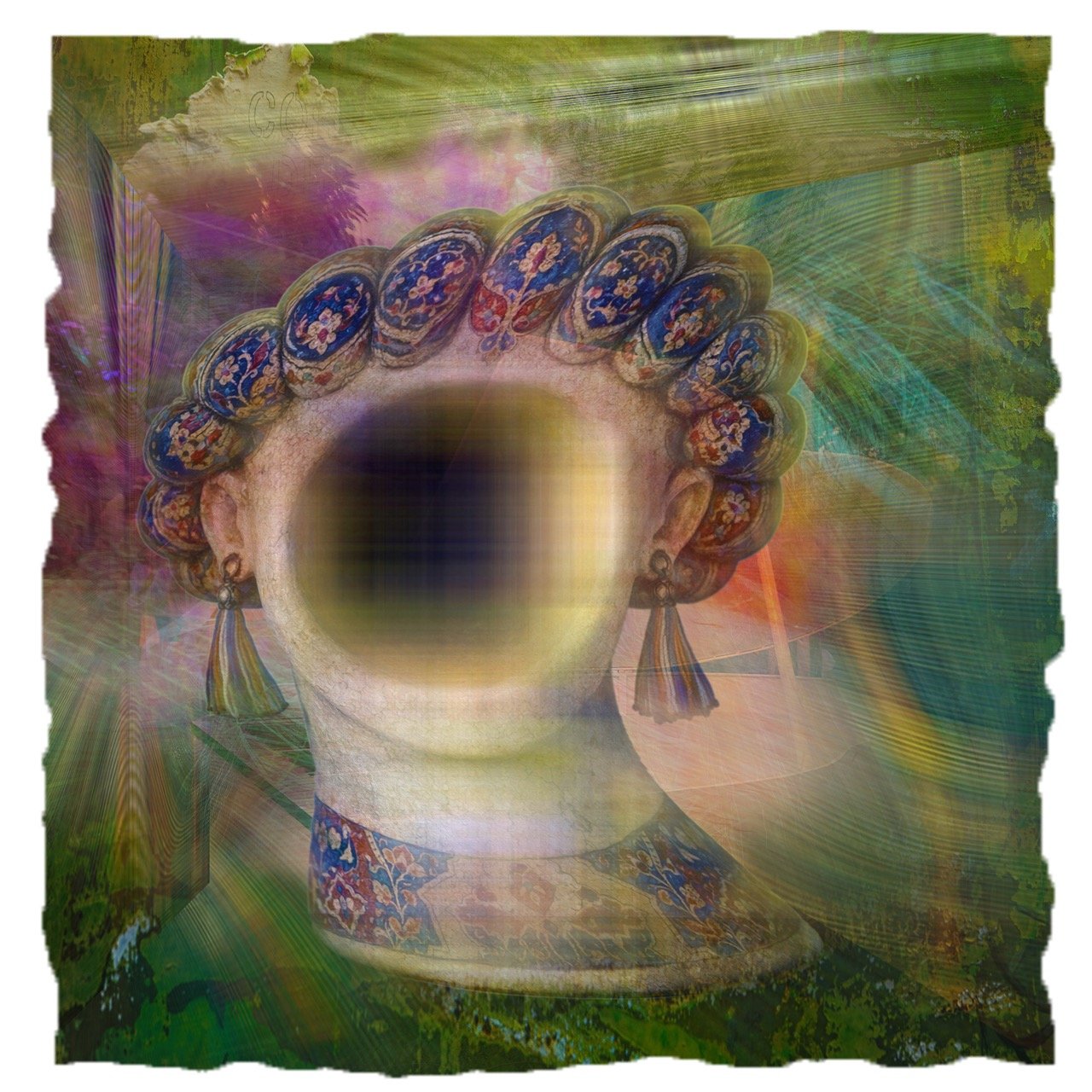
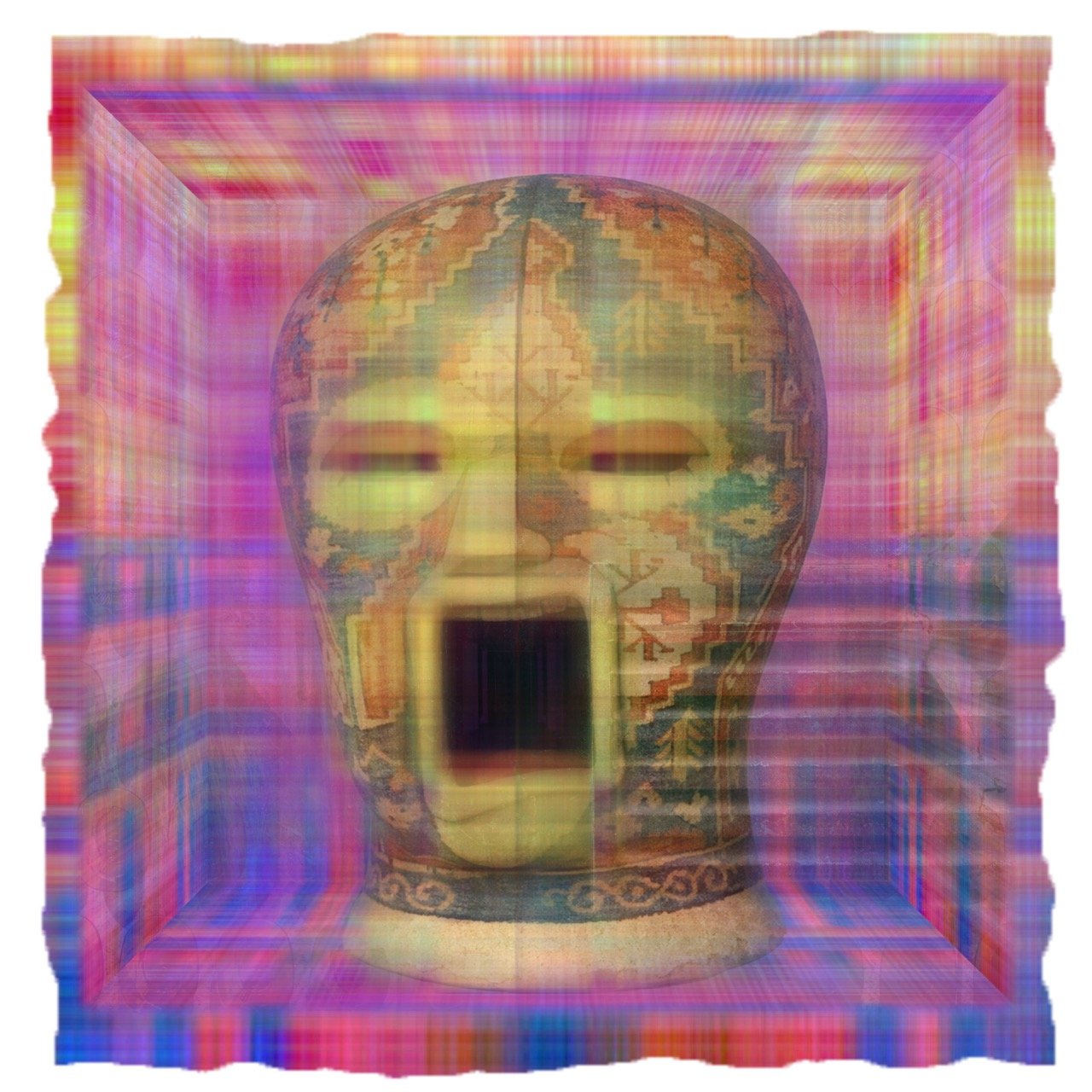
The title of the exhibition, Abandon Sight, does not imply a renunciation of sight, but rather the abandonment of its automatic nature. It is not a matter of closing one’s eyes, but of letting go of one’s habitual way of seeing, allowing the familiar surface to transform into something else: a map, a horizon or an inner landscape. Thus, from the antique carpets emerge uncertain presences, hollows, hollowed-out faces and anthropomorphic forms, suspended between relic, idol, material memory and mental image.
Visitors are greeted by Abandon Sight – Impermanence Insight (2026), a slowly transforming electronic canvas in which, over the course of almost five hours, the image shifts imperceptibly, eluding immediate recognition and inviting prolonged attention. The sound elements of Abandon Sight – Impermanence Insight and the video Abandon Sight – Brutalist (2025), developed by RobinG (Roberta Gilardi), enter into a dialogue with Balocco’s works and expand their sensory dimension. Alongside these is Fulco Abbate’s site-specific olfactory installation, created specifically for the exhibition space, comprising a composition of essences that includes rhizomes, a petricore accord — the scent of stone and wet earth — and musky, animalic notes.
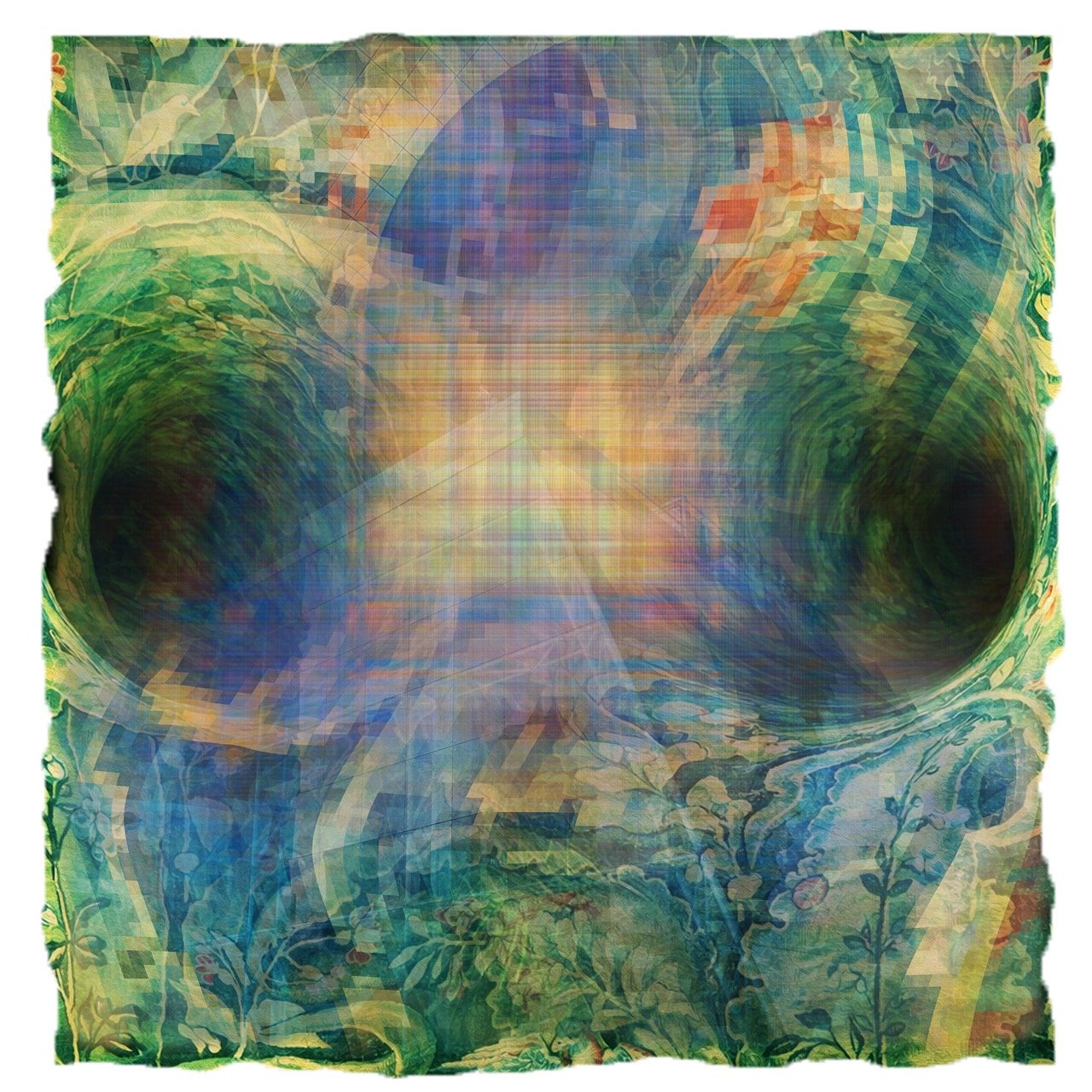
In the works of the Abandon Sight series, the colour of the chromographic prints is no longer merely a characteristic of the image, but interacts with light and the surrounding environment. In Abandon Sight – Vanitas Neuralis (2025), for example, a light-emitting device introduces chromatic variations that gradually transform the perception of the work.
One of the central features of the exhibition is The4thDimension – Transland (2025), an interperceptive work presented for the first time in Italy in this configuration, which establishes a connection between the viewer’s gaze and a visual universe conceived by the artist and structured into tens of thousands of potential states. This work reveals a perceptual paradox: the viewer observes the work, whilst the work, through an eye-tracking system, in turn observes the viewer, interpreting the dynamics of their gaze. From this reciprocal relationship emerges, as in a maieutic process, one of the many potential configurations conceived by the artist. The image is not merely something to be contemplated; rather, it takes shape through the individual’s visual experience, giving rise to a unique perceptual state in which the eye, the mind and the image enter into a dynamic relationship. It is in this exchange of glances that the work takes on an almost quantum-like dimension: observation becomes an integral part of the process through which a possibility manifests itself. The imagery of Transland draws on thousands of photographs of Italian landscapes taken by Balocco, which have also been reworked using artificial intelligence to create dystopian scenarios set five hundred years in the future. Artificial intelligence plays a part in the creation of this imagery, but not in the way the interaction works. The sound element is created by the artist using a recording of a viola da gamba performance by Roberto Gini.
Similarly, Oracle (2026) introduces an element of interaction and unpredictability: an algorithmic application generates a response based on the viewer’s experience, thereby becoming part of the exhibition’s dramaturgy.
Balocco’s work falls within what the artist terms “hybrid thinking”. Photography, observation of reality, creative drawing, digital processing, algorithmic layering and artificial intelligence all converge within a single body of work, without any of these tools constituting the end goal of the piece. Technology is not celebrated for its own sake, but is used as a tool for transforming the way we see. From this perspective, the technological device also becomes a metaphor for the responsibility that comes with seeing: an invitation to pay attention, to exercise restraint and to show care.
With Abandon Sight, BUILDING TERZO PIANO presents a project in which heritage, memory and technology intersect through the experience of seeing. Visitors are not asked to decipher an image or recognise a shape, but to linger in a zone of instability, where what appears can transform and where perception becomes a space of transition between memory and the present, matter and image, the real and the mental.
Artisti