



Sophie Ko. Testimoni
14.10.2026 – 23.12.2026
From October 14th to December 23rd, 2026, BUILDING GALLERY presents Testimoni, a solo exhibition by Georgian artist Sophie Ko (Tbilisi, 1981) – represented by the gallery – curated by Federico Ferrari.
Six years after her participation in the exhibition Materie, Spazi, Visioni (2020), BUILDING dedicates a major solo show to the artist, presenting a comprehensive overview of her graphic, painterly, sculptural, and installation work across the gallery’s three exhibition floors.
On this occasion, Sophie Ko presents to the public for the first time a corpus of approximately sixty works that explore the themes and artistic languages that characterize her work.
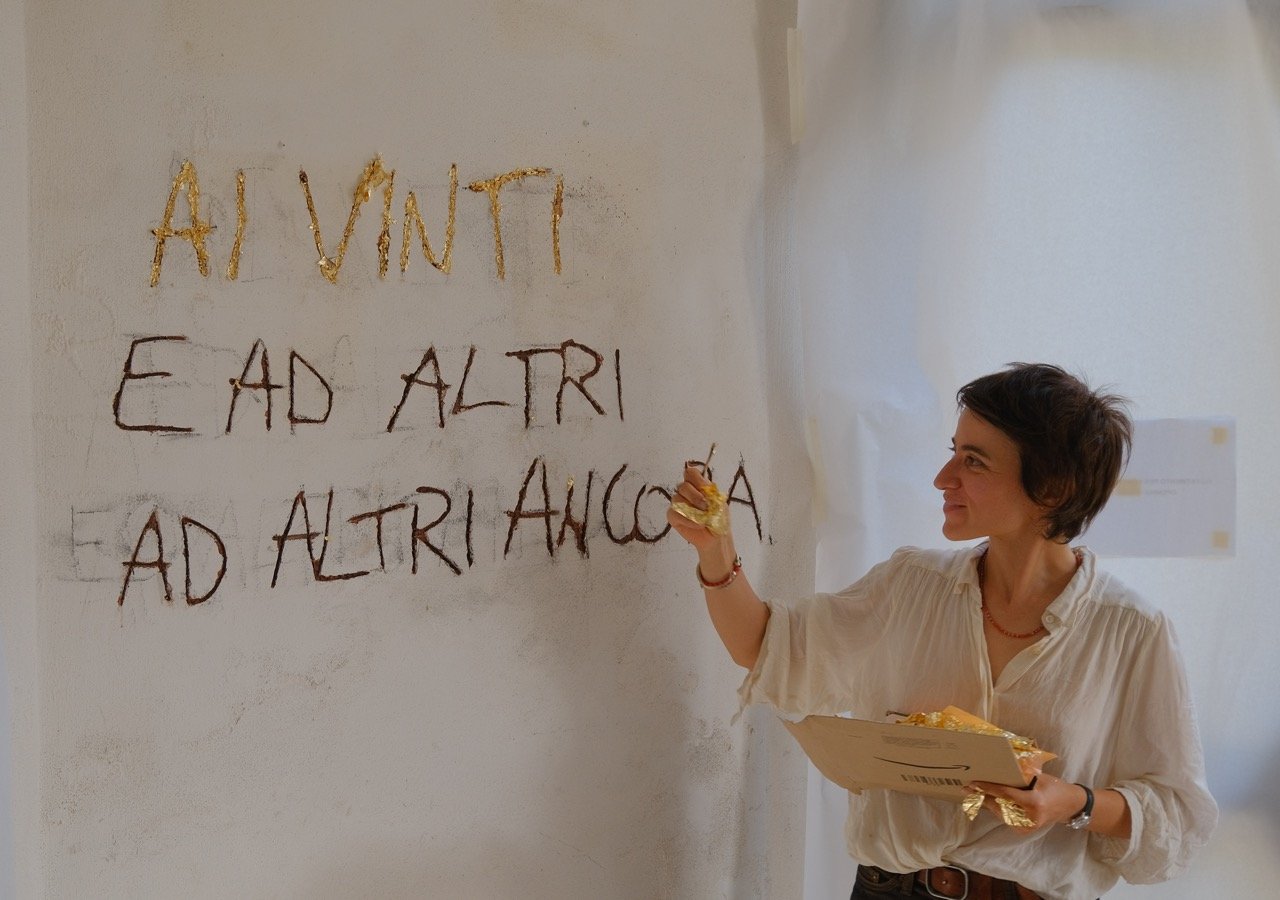
Sophie Ko’s practice is complex, aimed at a radical engagement with the tradition of art history, made possible by an extremely refined formal approach, and capable of combining exquisitely detailed work with materials and a delicate, almost ascetic poetics. The previously unseen works presented in the exhibition spaces of BUILDING GALLERY mark the culmination of a journey that began fifteen years ago with the first Geografie temporali.
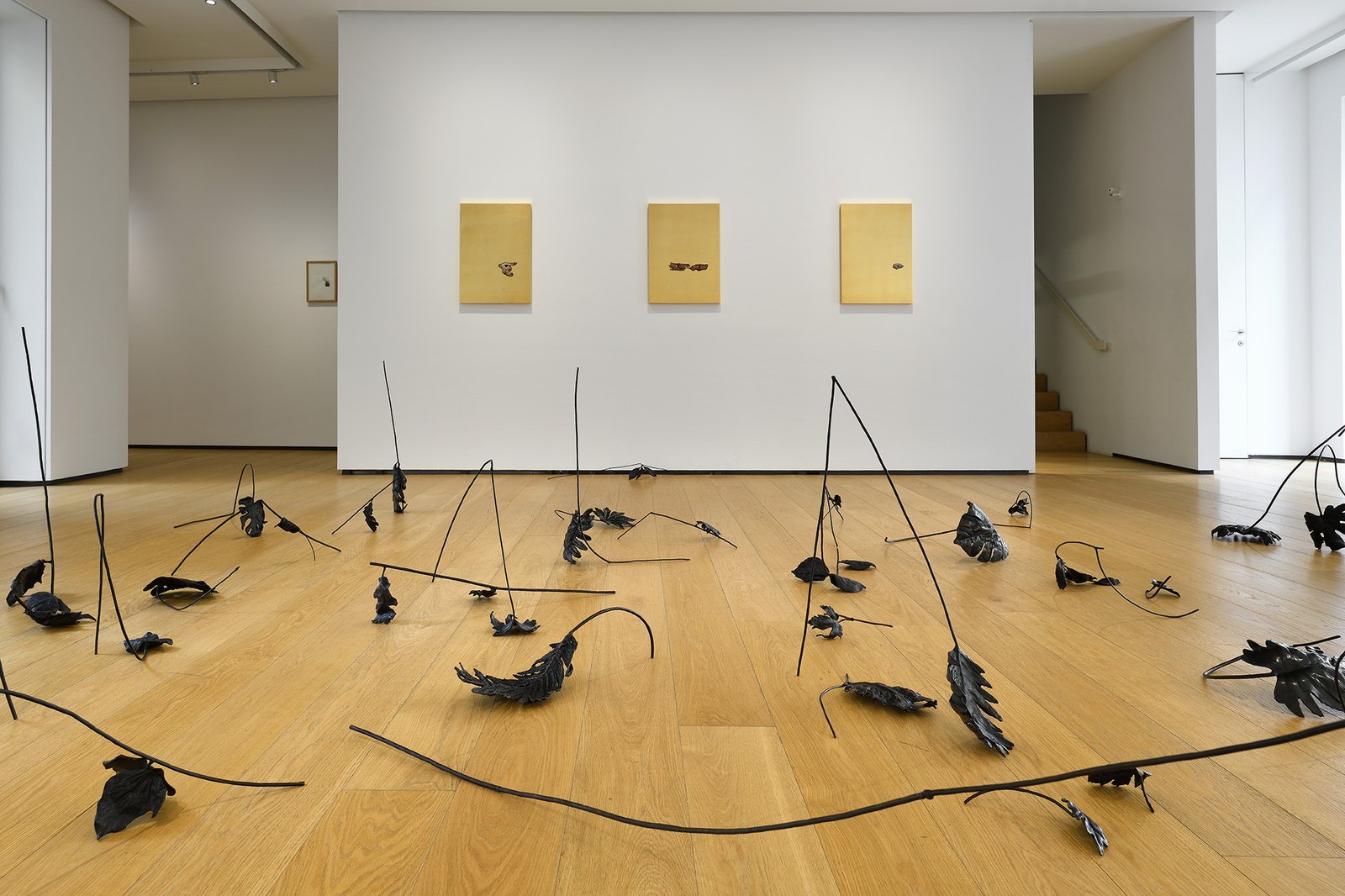
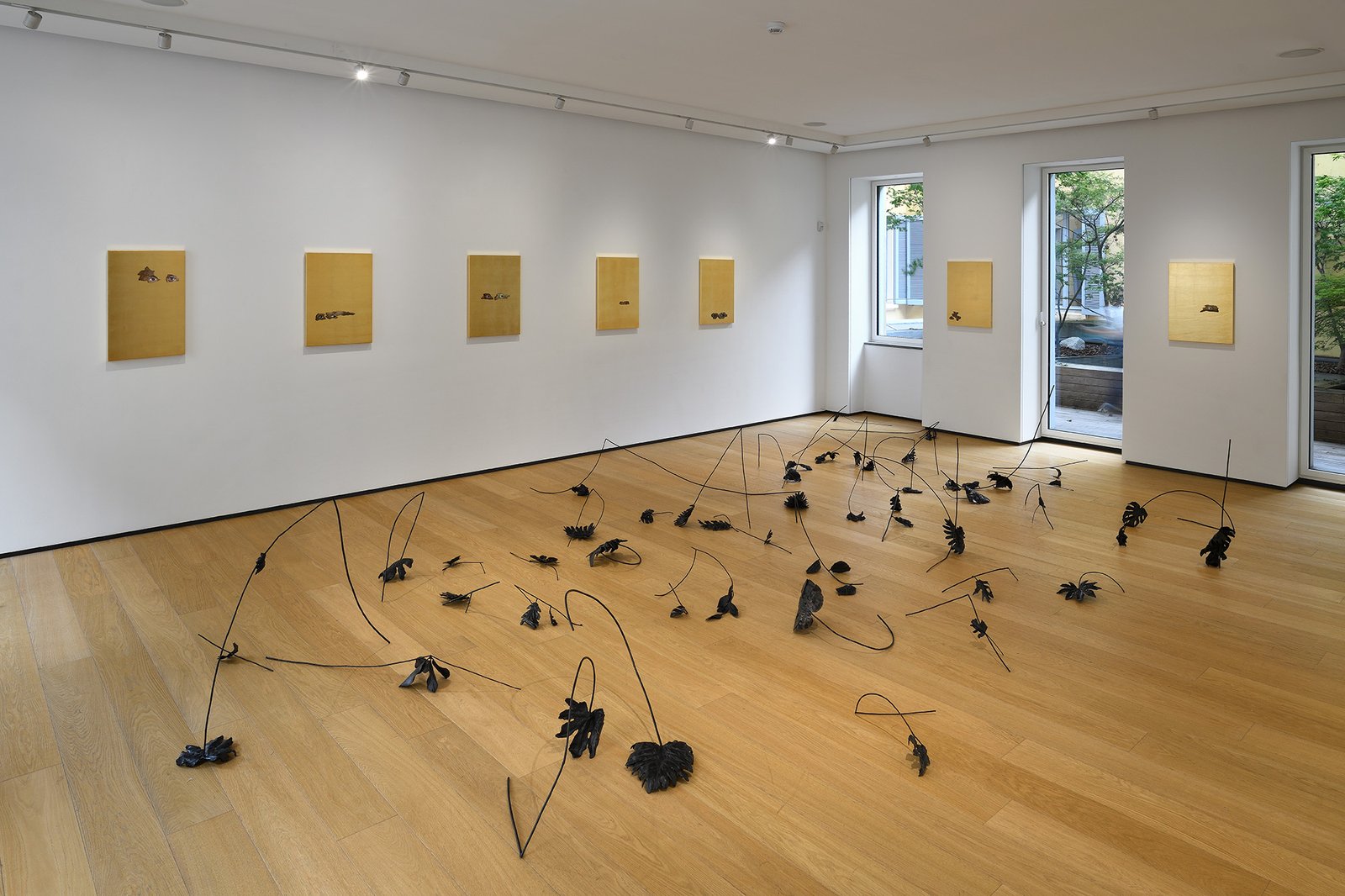
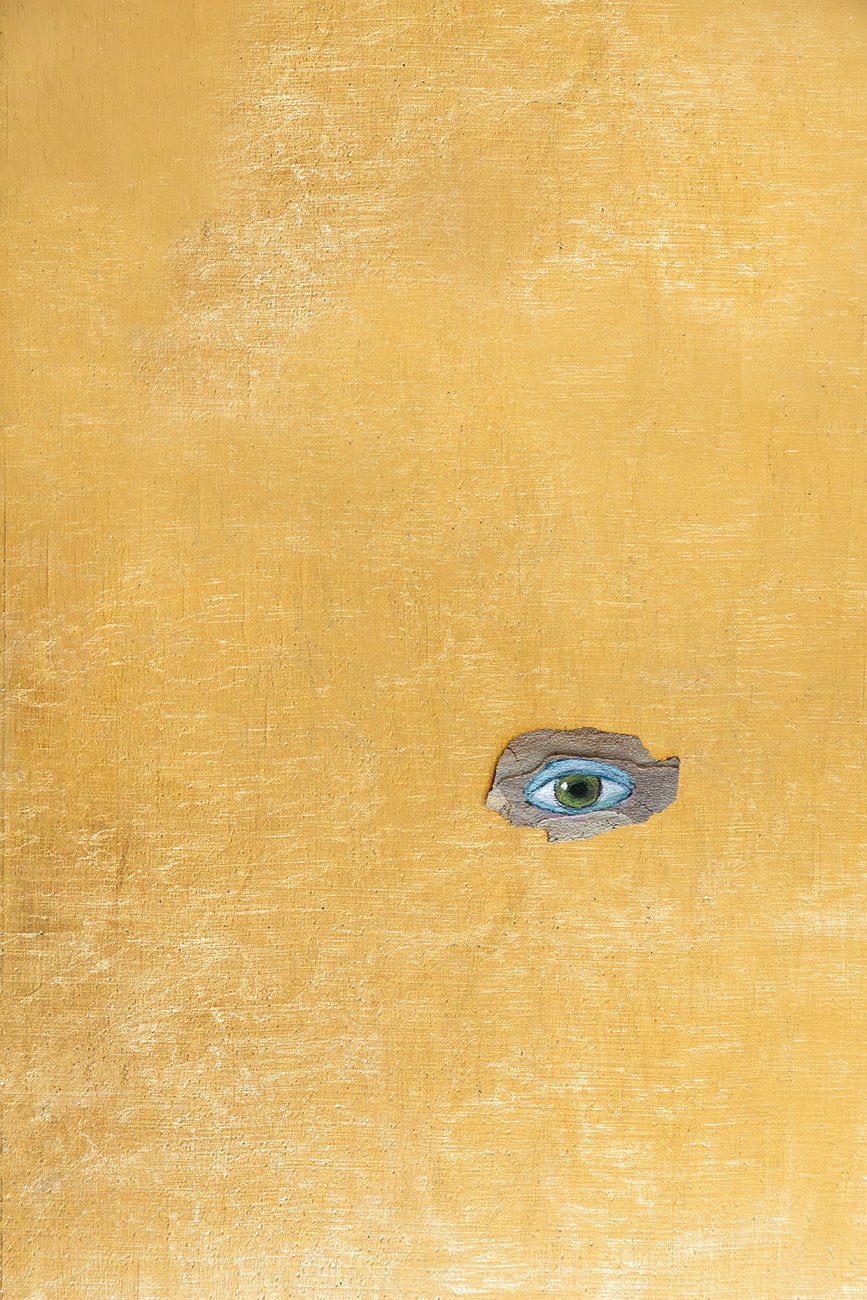
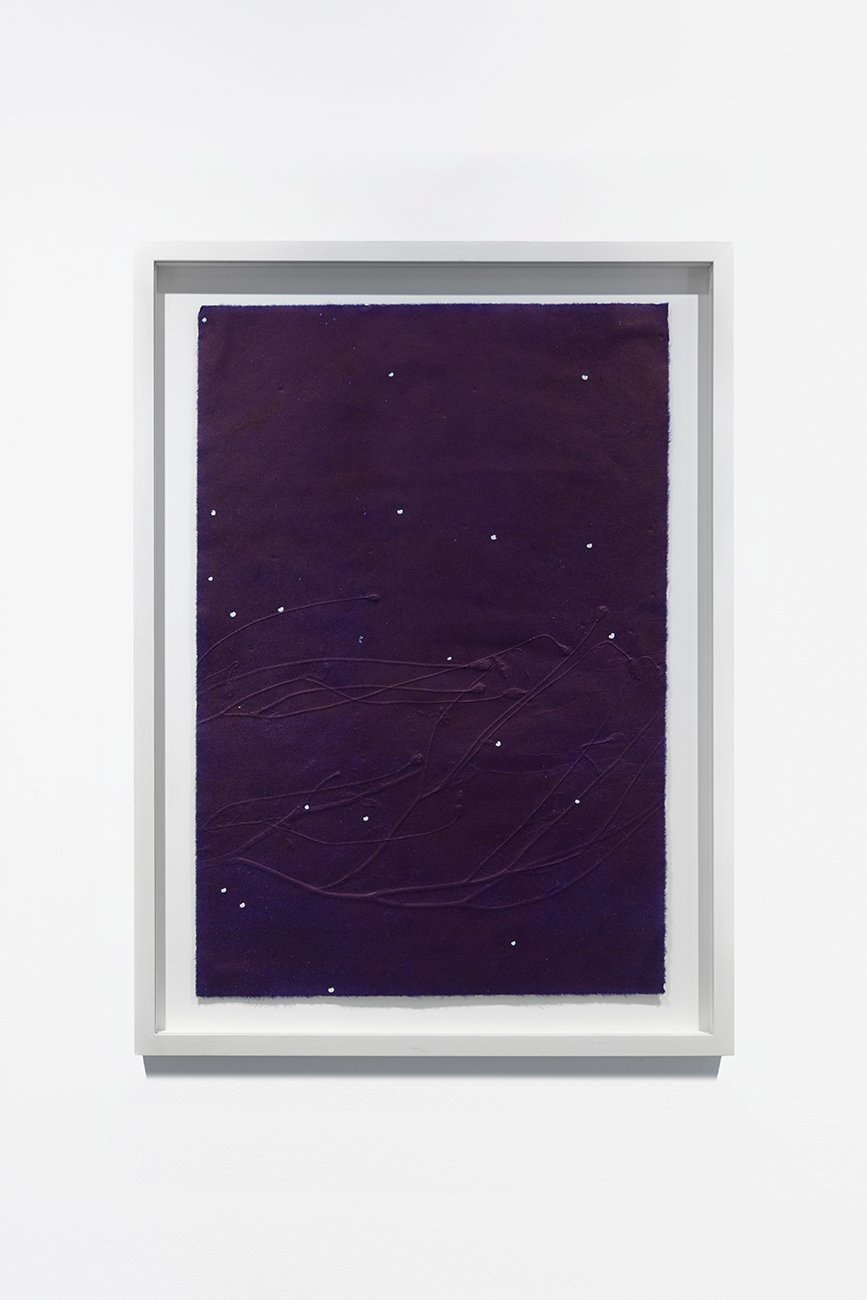
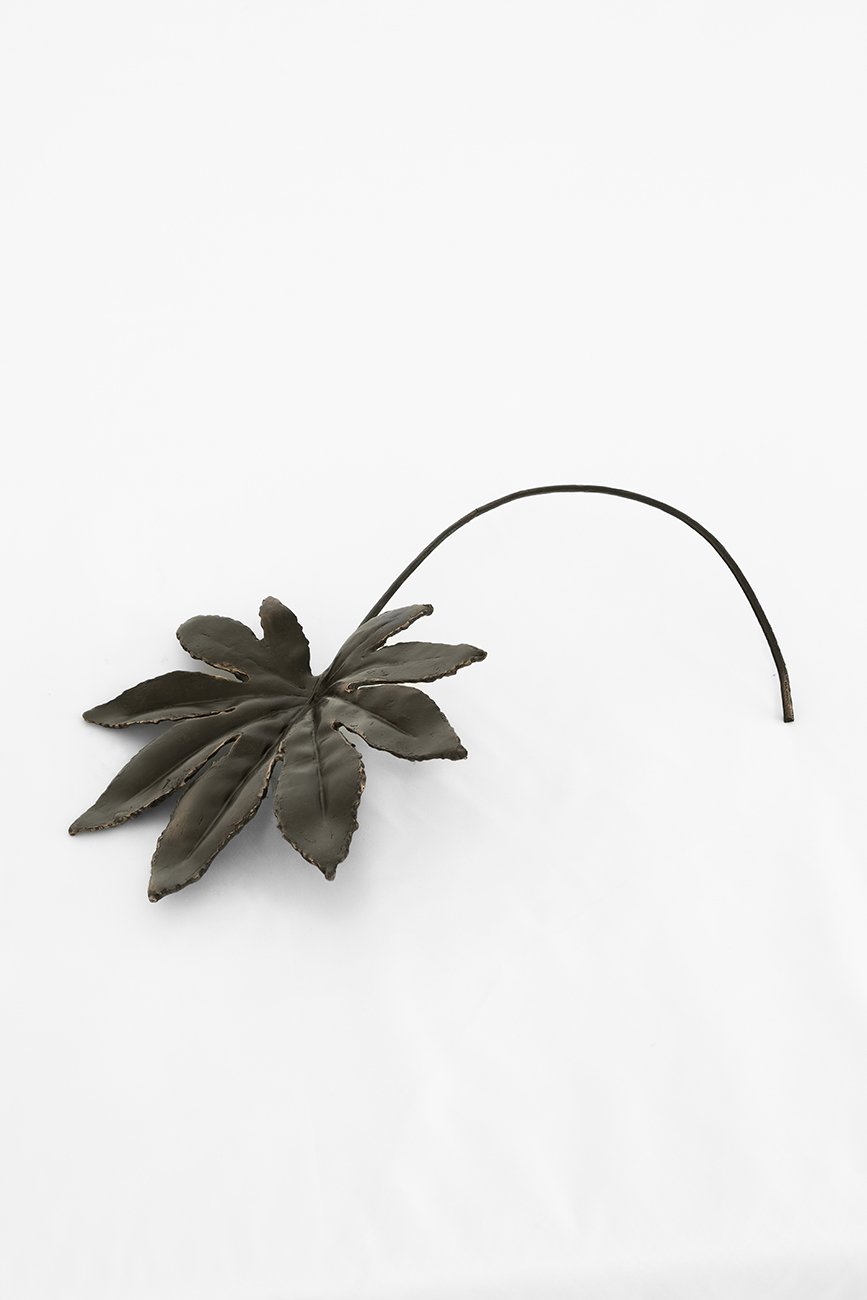
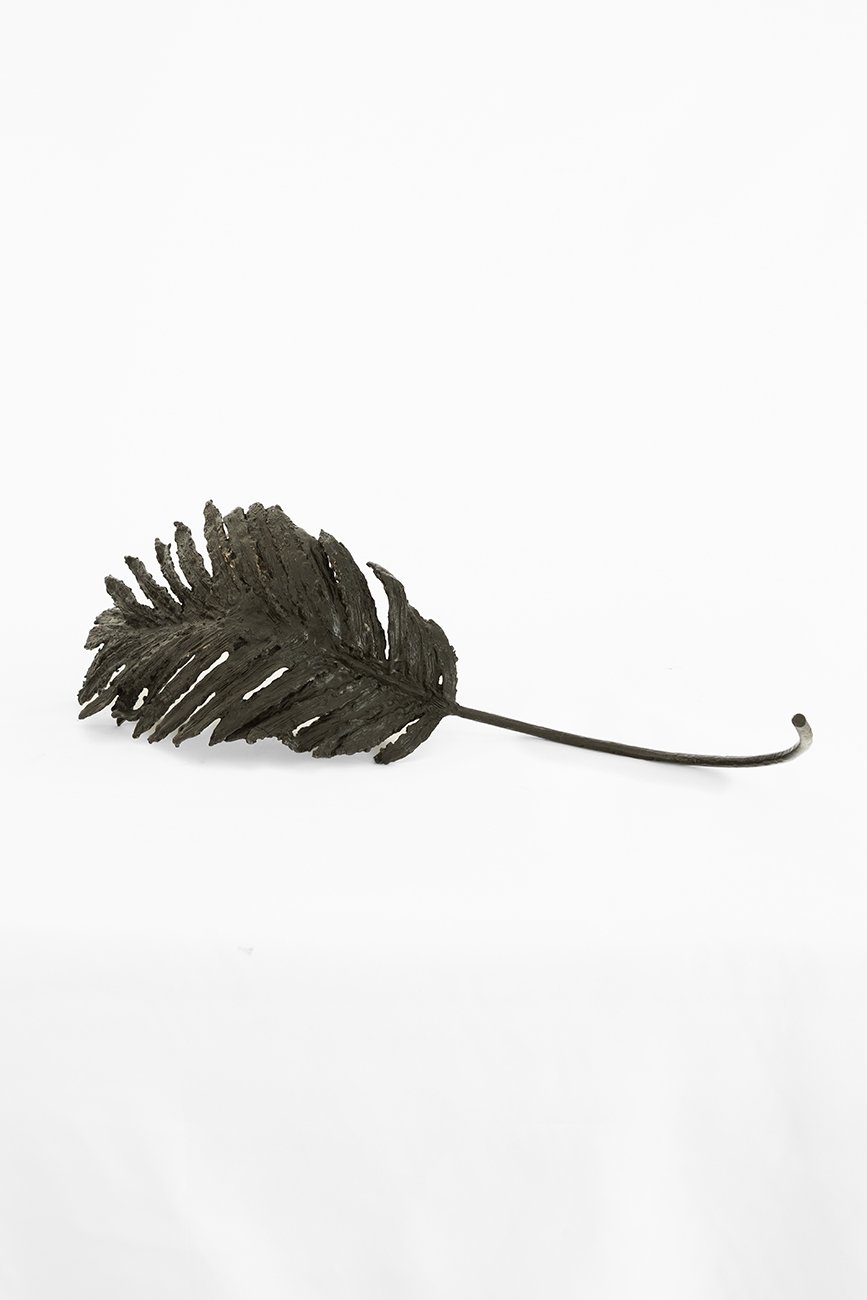
Pure pigment, gold leaf, tree bark – the support on which the eyes of Testimoni (2026), which populate the first floor, are painted – together with bronze, used for the sculptural presences, and the remains of burned images that the artist calls “unburnt remains”, from the Waldgänger series (2012): these are the materials on which Sophie Ko’s visual grammar is founded, chosen for their capacity both to preserve and to threaten form.
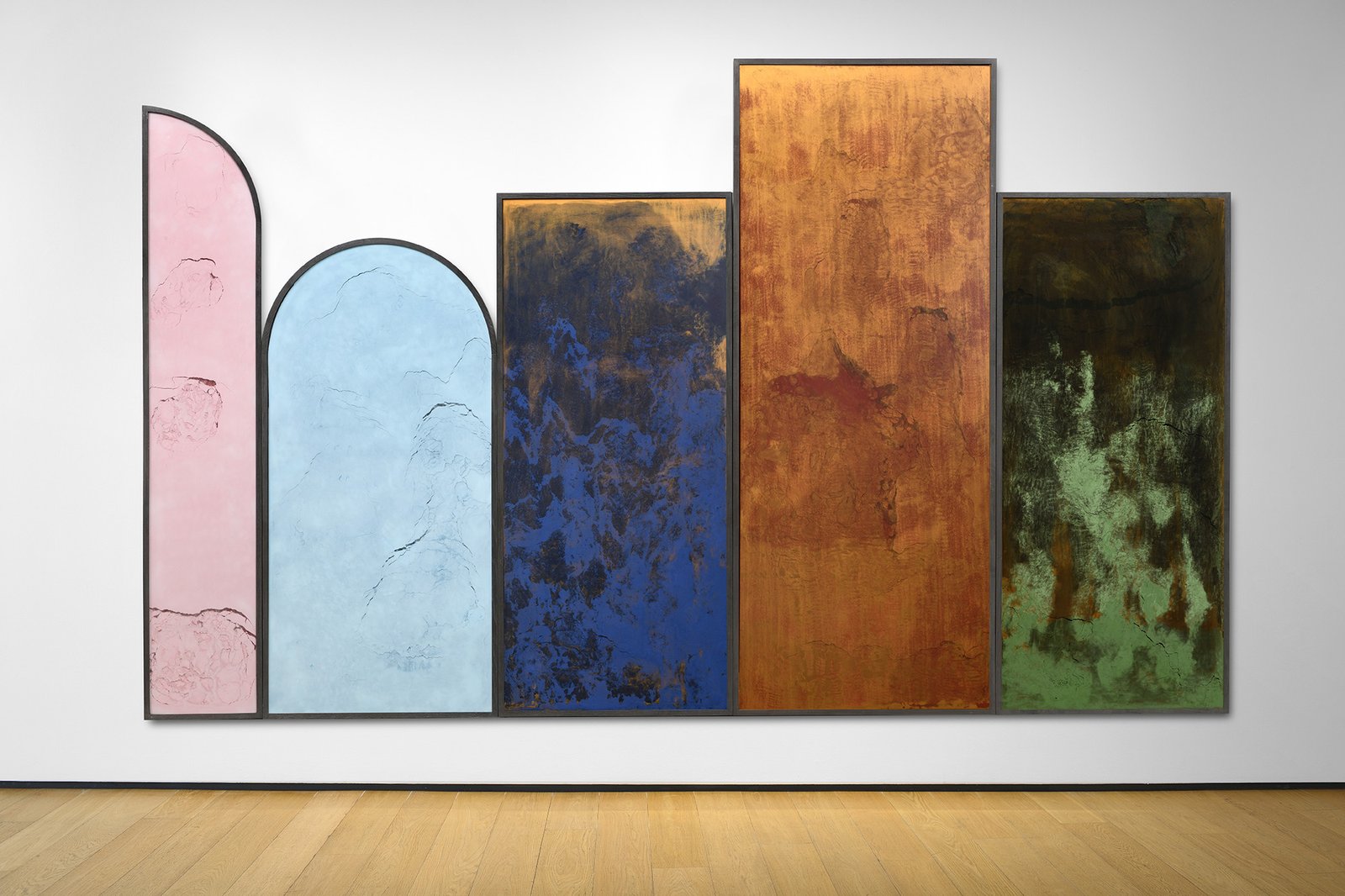
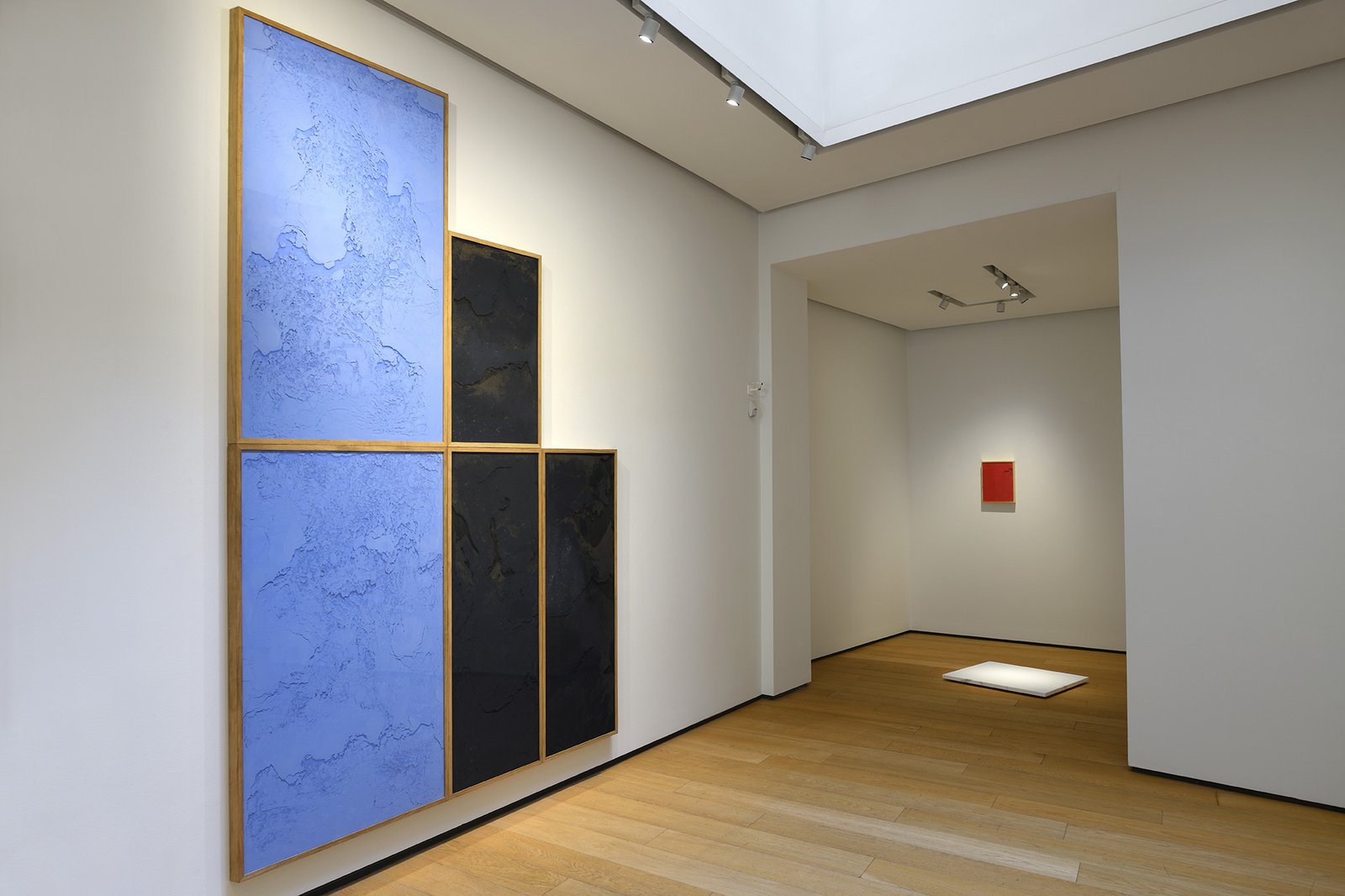
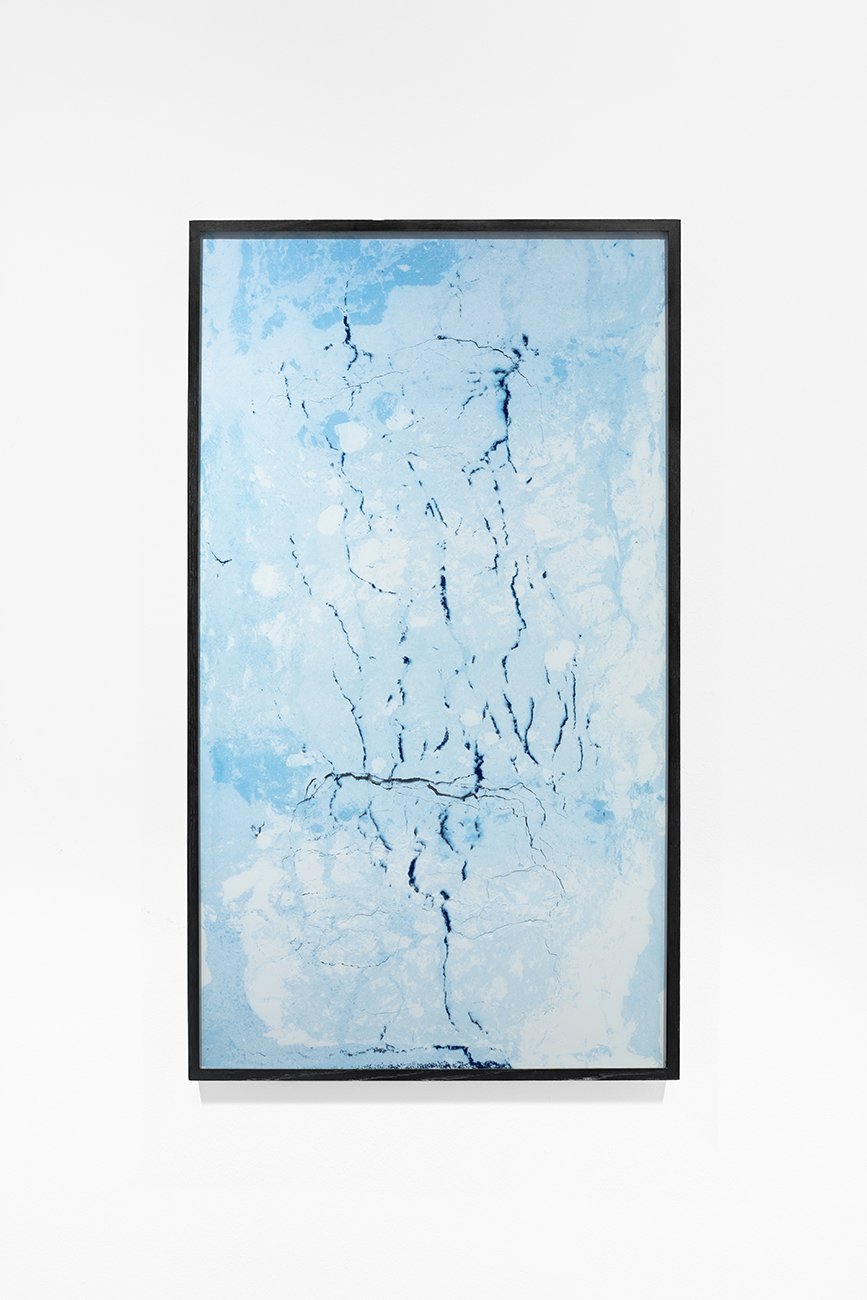
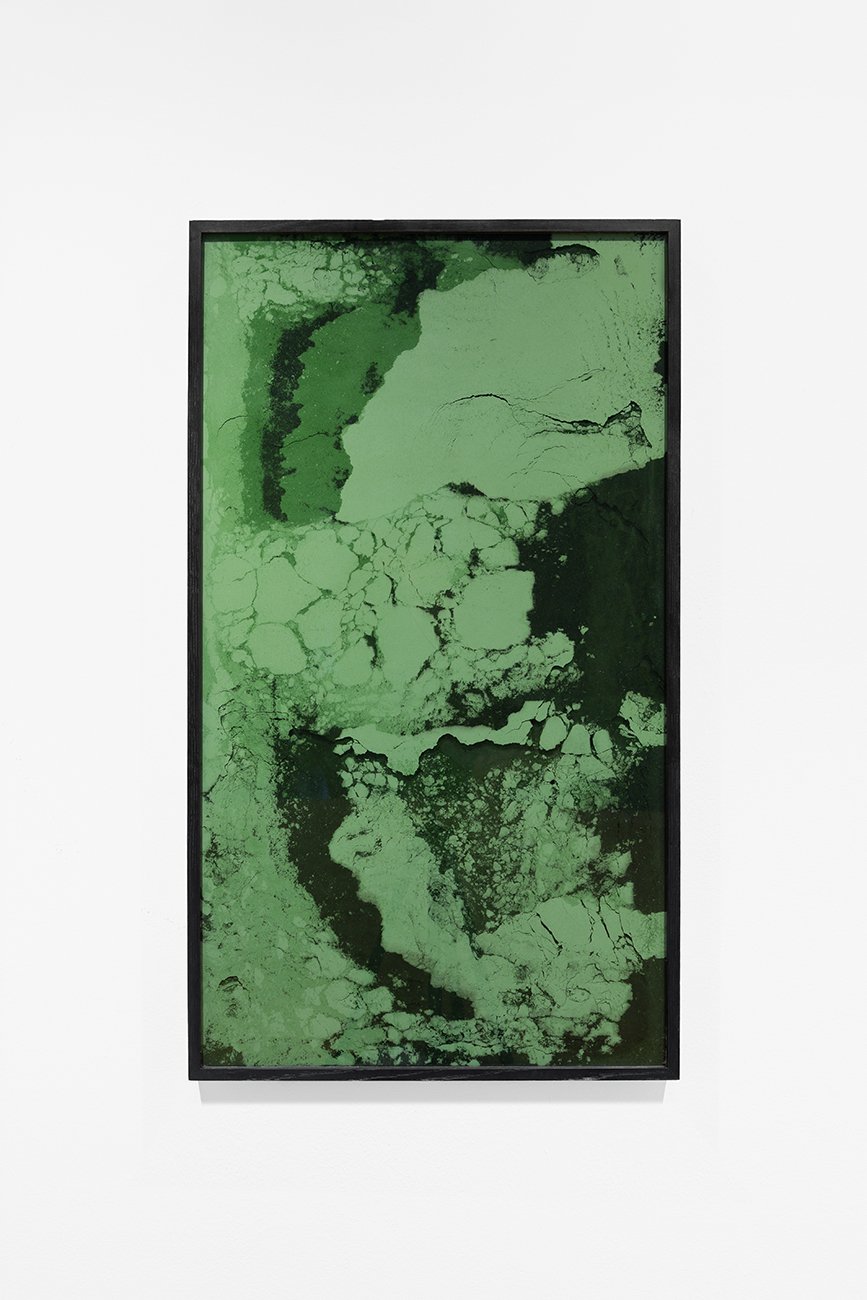
A white marble sculpture, Grembo (2026), which dialogues with the pure pigment of Il sangue di Demetra (2026), highlights the tension between matter and form, between destiny and origin, on which the entire exhibition is built. As in the Geografie temporali, which have long characterised her research, matter here too remains subject to the force of gravity: it shifts, collapses and redistributes itself, so that each work silently continues to change even after it has been exhibited – a process that reverses the traditional painterly gesture. Rather than adding colour, Sophie Ko arranges unstable matter, allowing time itself to compose, or break apart, the image.
The theme of memory and the stratification of temporal dimensions, which has always been at the heart of the artist’s research, finds a new articulation here, structured in three movements – one for each floor of the gallery. Following the mysterious and fragmentary traces of a past that explicitly evokes the van Eyck brothers’ Ghent Altarpiece (1426–1432) and the dreamlike and mythological realm of Morpheus, on the first floor, the visitor walks through a forest of eyes painted on tree bark and set on gold-leaf panels, alongside bronze plant presences that, rather than simply being observed, seem themselves to return the gaze.
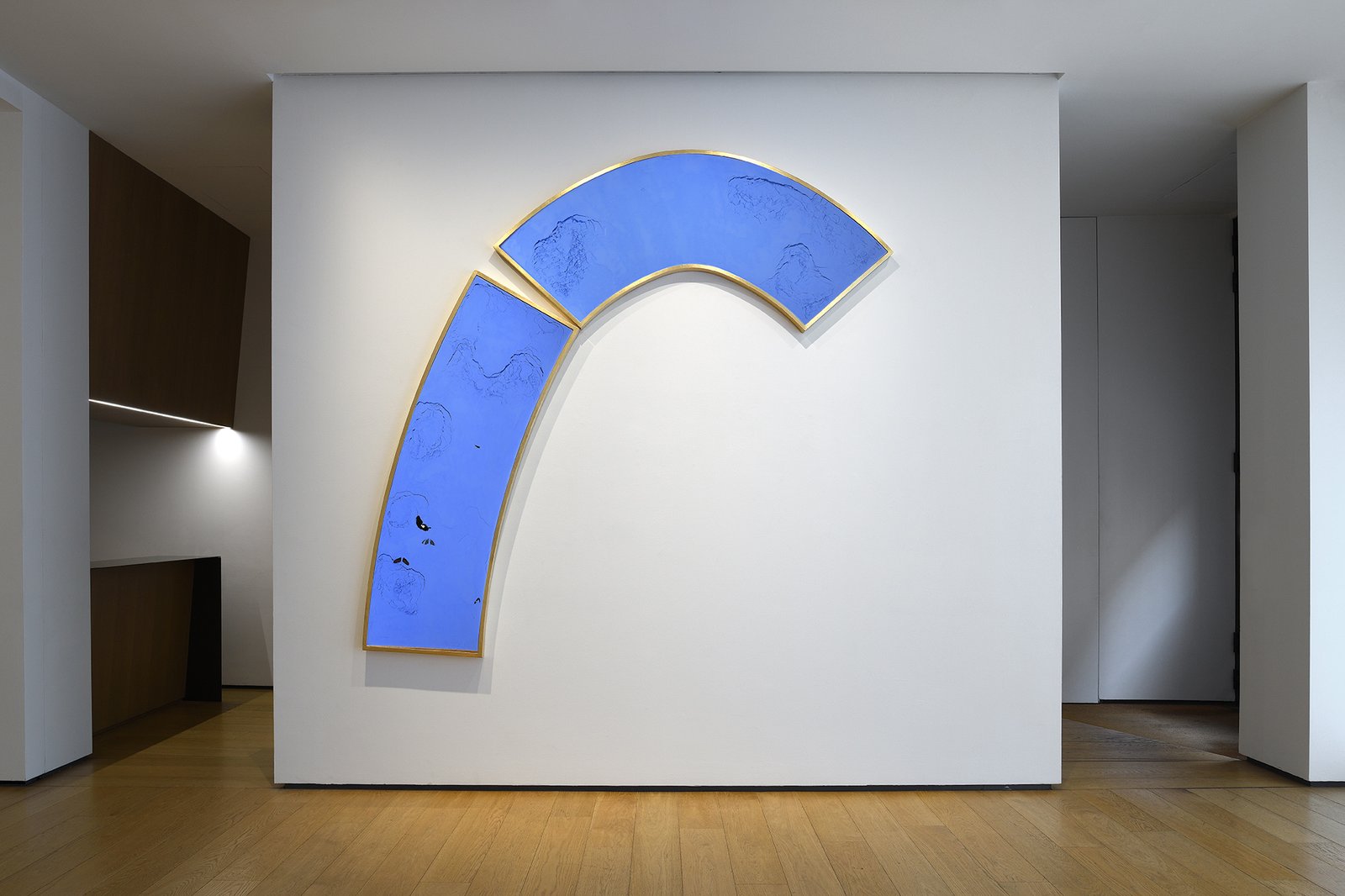
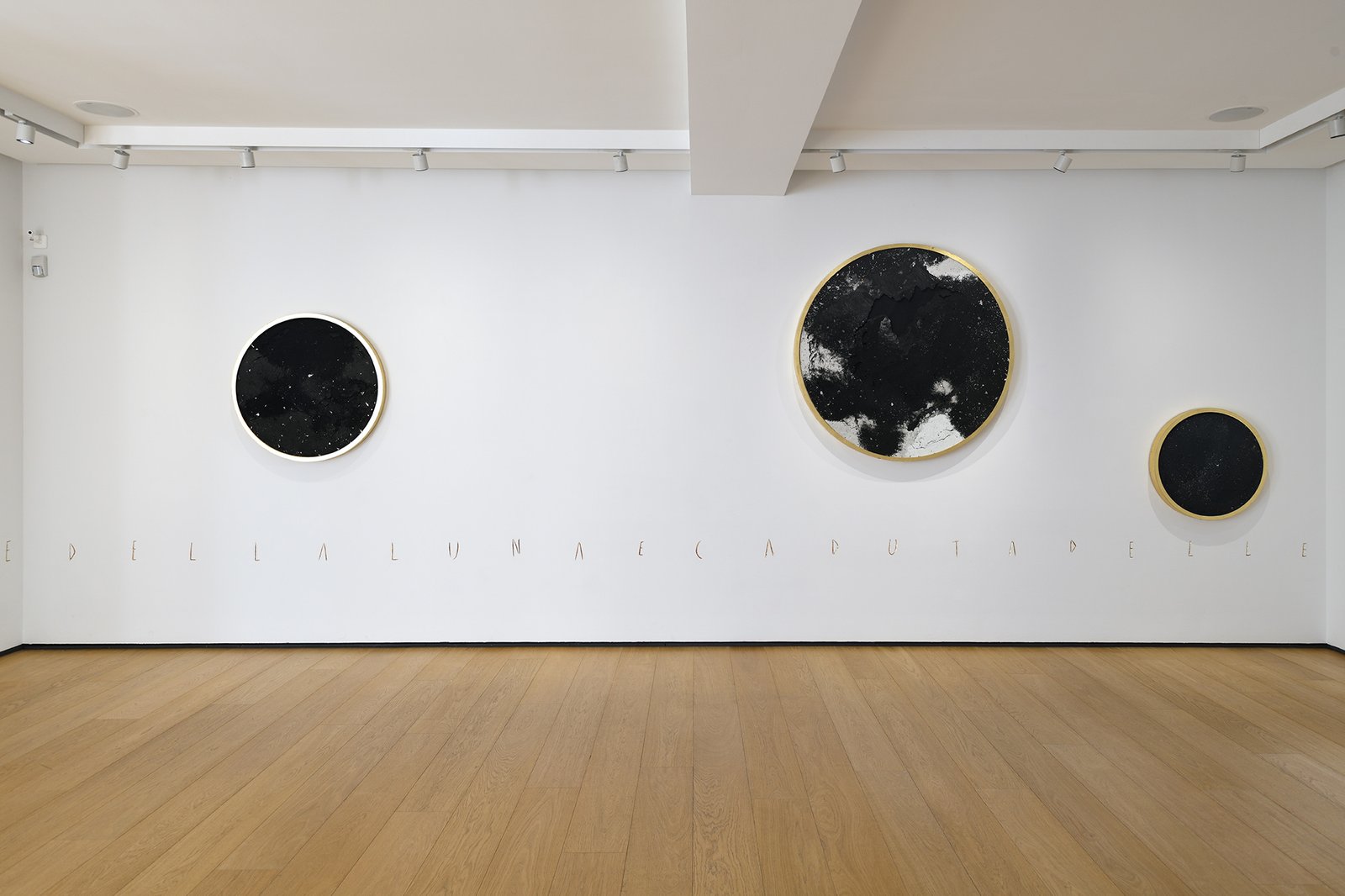
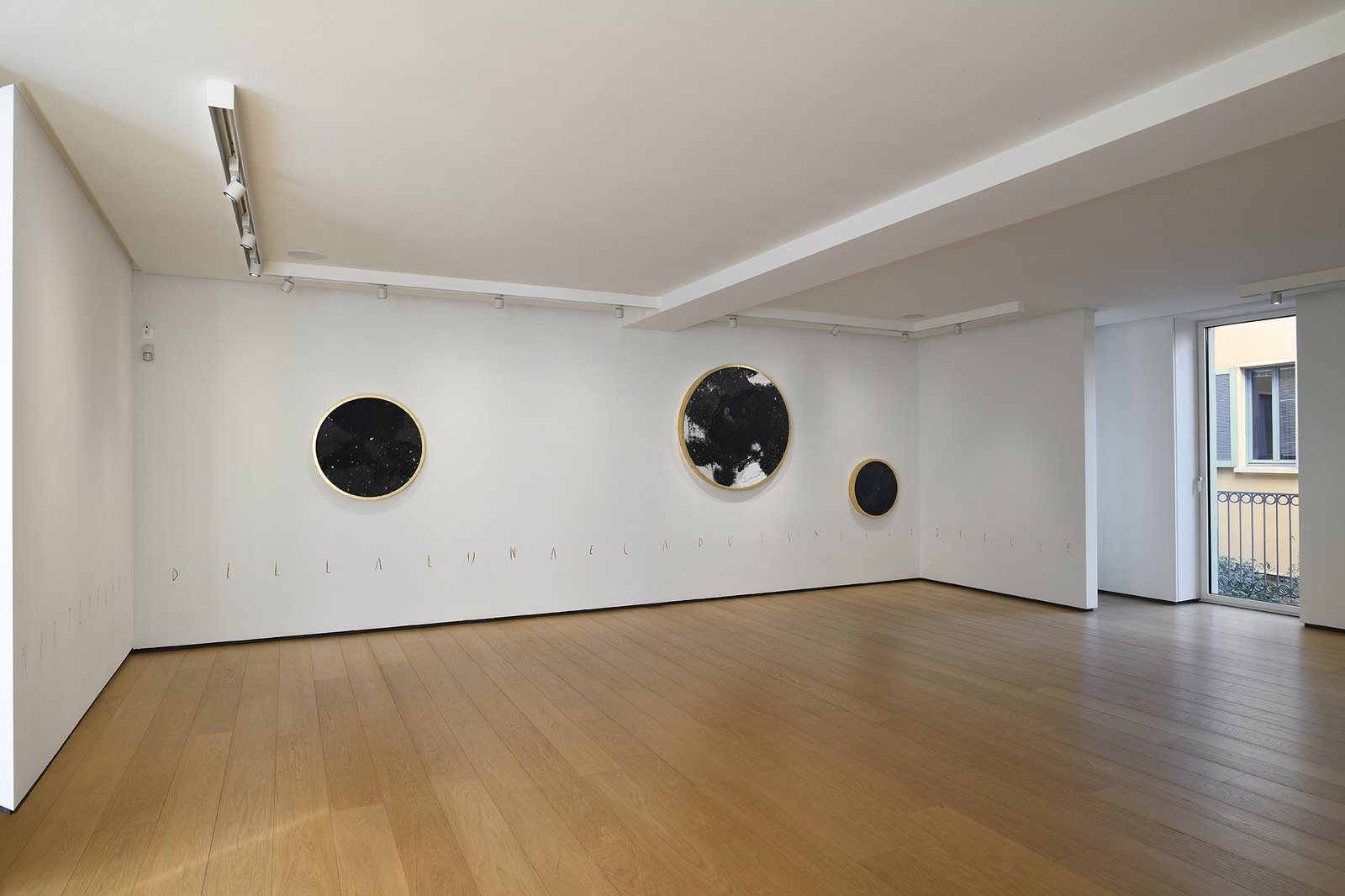
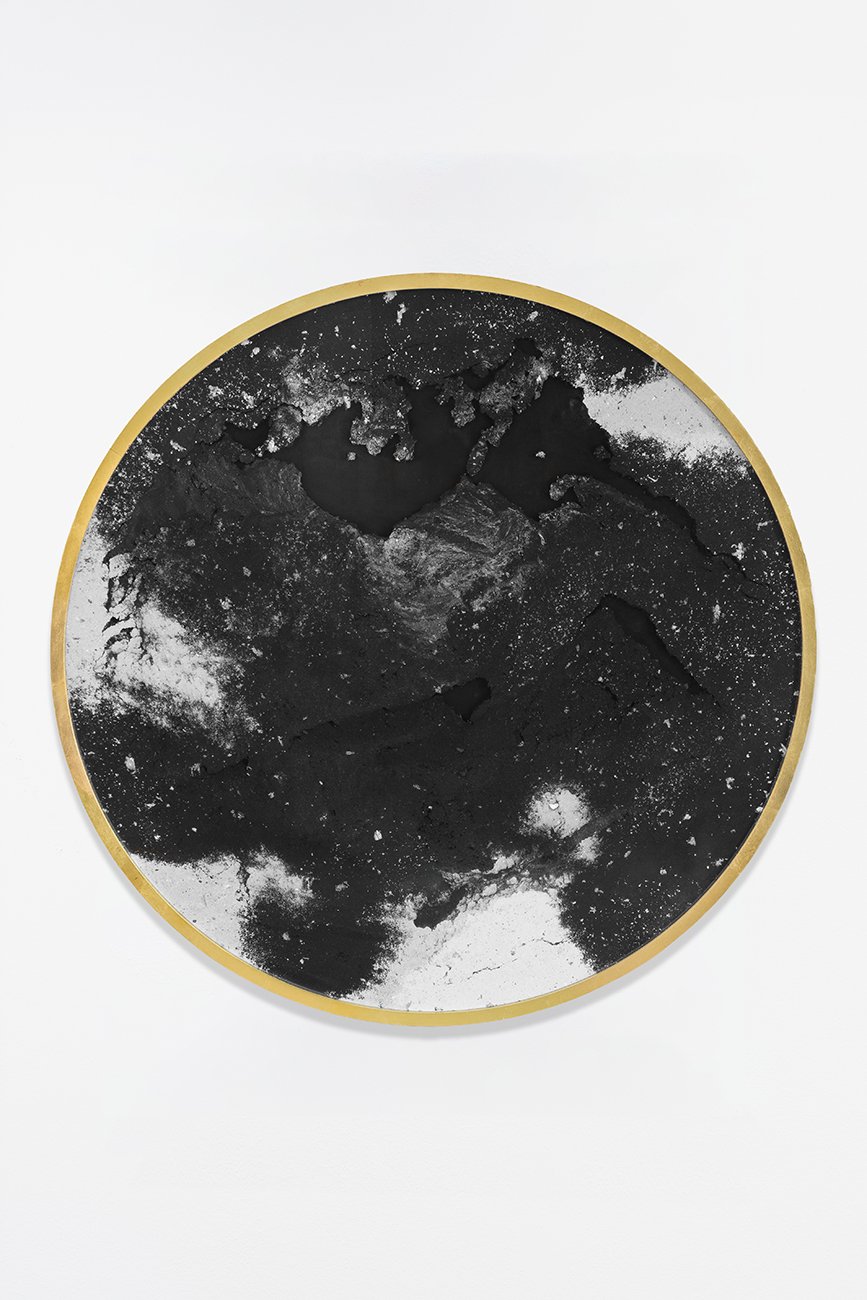
The exhibition then unfolds onto the second floor, reaching a culmination in which Morte del Sole, della Luna e caduta delle stelle (2026) – a further reference to art history, and in particular to the fifteenth Century miniaturist Cristoforo de Predis – finds an enigmatic and disorienting resolution in a series of circular and elliptical Geografie temporali, capable of restoring history and its most jarring contradictions to an eternal dimension.
The reference to the Ghent Altarpiece is not merely iconographic. With its structure of panels that open to reveal different narrative and symbolic layers, the van Eycks’ work offers Sophie Ko a structural model even before a thematic one: like the Ghent polyptych, Testimoni unfolds through a succession of thresholds, with each floor of the gallery acting like a panel that opens onto a new degree of vision. Likewise, the reference to Cristoforo de Predis – a Lombard artist known for cycles devoted to astronomical and eschatological subjects – introduces a cosmic and apocalyptic imaginary into the exhibition, in which the fall of the celestial bodies becomes a metaphor for a time that is consumed and, at the same time, regenerated.
Across its different floors and formal expressions, the exhibition moves between two focal points which, like those of the ellipsoidal painting that concludes the exhibition on the second floor, draw the gaze into an indeterminate temporal dimension—one in which we are called to participate as “witnesses”—before lifting it towards the suspension of time and the eternal perfection of forms, where the visitor is confronted once again with the figure of the indestructible baton.
Italian critics have frequently focused on Sophie Ko’s work. Riccardo Venturi has described her Geografie temporali as bodies in a perpetual state of collapse, suspended between creation and destruction; other interpreters have instead emphasised the almost devotional quality of her practice, which transforms pigment into relic and frame into reliquary. It is within this framework—between memory, matter, and time—that Testimoni finds its place, taking to its extreme a body of work that has always rejected the static nature of the image in order to restore, instead, its essence as an event.
Testimoni therefore marks a further stage in Sophie Ko’s artistic trajectory, introducing significant new developments in relation to her previous work: not a retrospective, but a multifaceted constellation of new works that revisits— and revalues— the most significant moments of an artistic and intellectual path now reaching full maturity.
A catalogue will be published on the occasion of the exhibition, featuring a text by curator Federico Ferrari, an interview with the artist, and contributions by Sergio Risaliti, Artistic Director of Museo Novecento in Florence, and Daniela Ferrari, curator and conservator at Mart—Museo di arte moderna e contemporanea di Trento e Rovereto.
Artisti
News