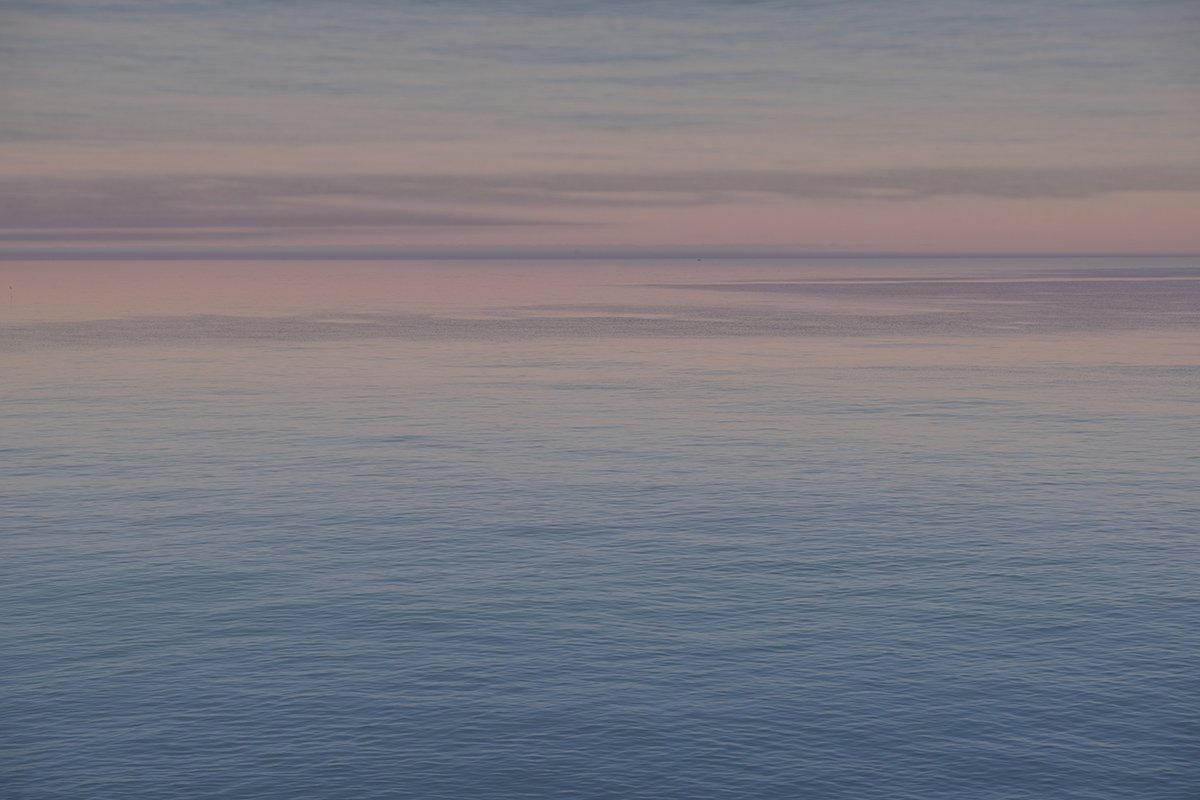
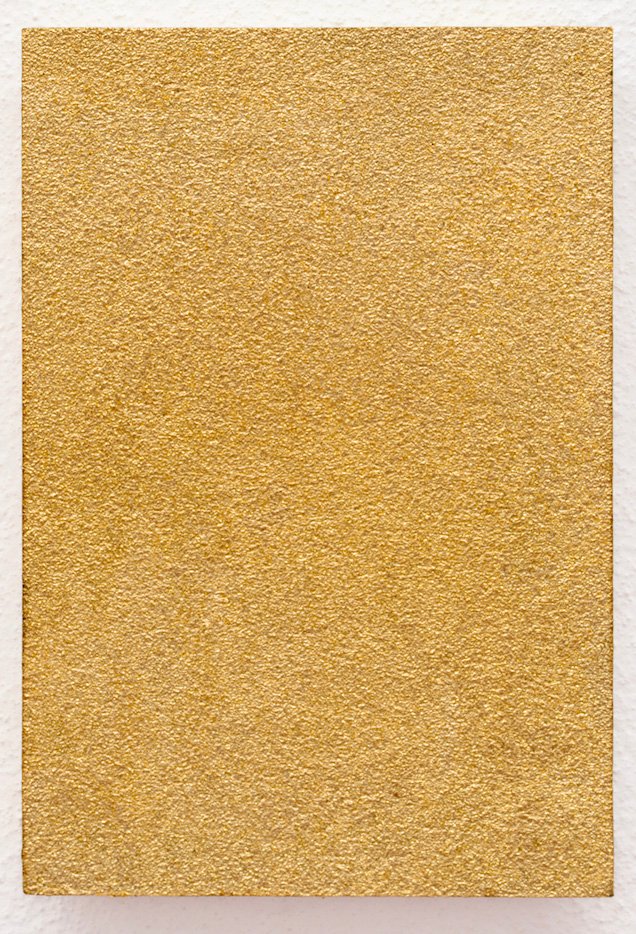
Un mondo tutto all’aperto. Alice Cattaneo, Marco Andrea Magni
15.01.2026 – 14.03.2026
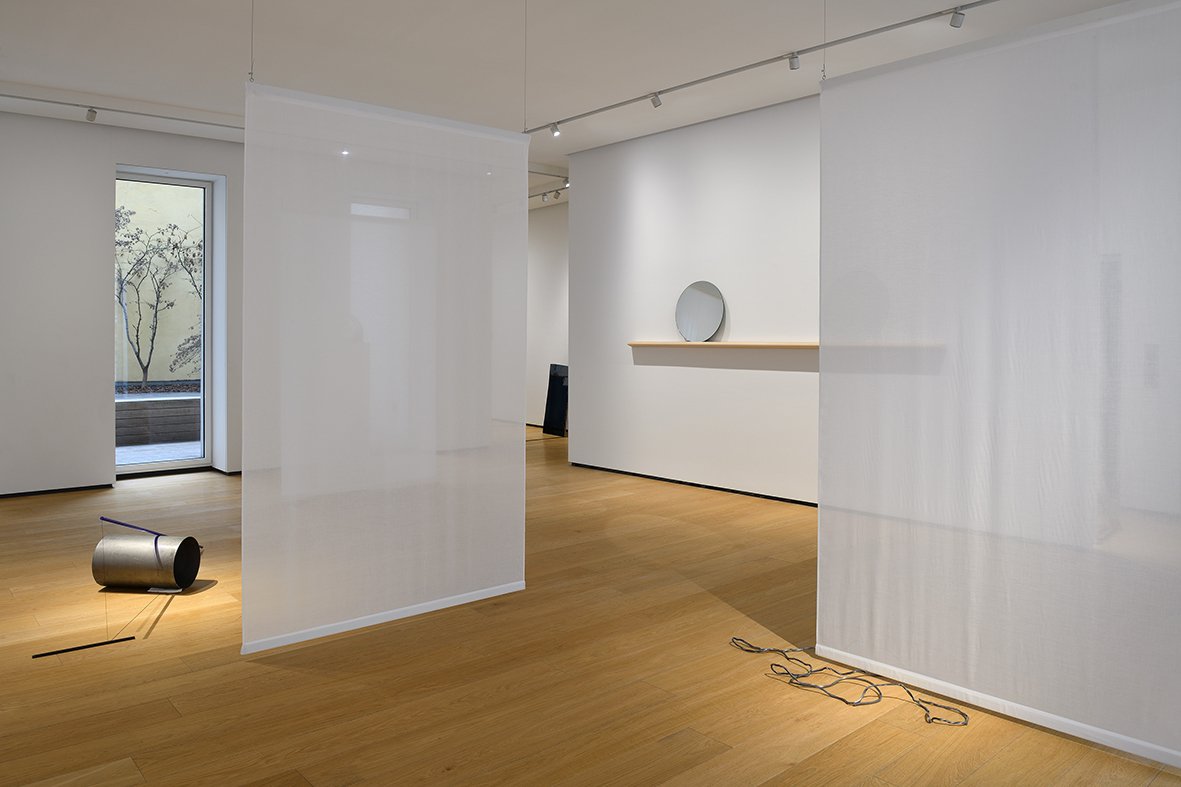
From January 15th to March 14th, 2026, BUILDING GALLERY presents the exhibition Un mondo tutto all’aperto by artists Alice Cattaneo (Milan, 1976) and Marco Andrea Magni (Sorengo, Switzerland, 1975), curated by Giovanni Giacomo Paolin. The exhibition unfolds as a journey connecting the ground floor and first floor of the gallery, offering a bilateral dialogue between sculptures and installations, in which existing works and new productions intertwine, with very different forms but similar sensibilities.
The title of the exhibition is a quote from a short story by Italo Calvino entitled Dall’opaco, contained in La strada di San Giovanni (1990), an autobiographical collection published posthumously by the writer’s wife. In this “exercise in memory,” Calvino describes the places of his childhood as a world made up of broken and oblique lines, in which the horizon remains the only possible continuous straight line. Through multiple references to the landscape, the writer explores the ways in which the gaze and the position of the body function in a given place, remaining pleasantly caught between the ambiguities of perception. He addresses universal themes with apparent simplicity, creating images that can naturally be placed alongside contemporary artistic research, especially if it is sculptural in nature. The words that make up the title suggest a contradiction: how can a world that is entirely outdoors exist? Can the concept of openness also contain its opposite? Calvino writes about his surroundings, referring to opposing but coexisting characteristics: a world made up of clarity and opacity, of sunshine and shade, of one side that is bright and another that is gloomy. He himself writes from the opaque and from there, he tries to describe personal worlds in which “each of us stays in our own but looks at others in theirs, and no one ever leaves their own but is always under the eyes of others.” The open and the closed thus become ways of being, in which everything that appears to the eye is exposed and withdrawn at the same time.
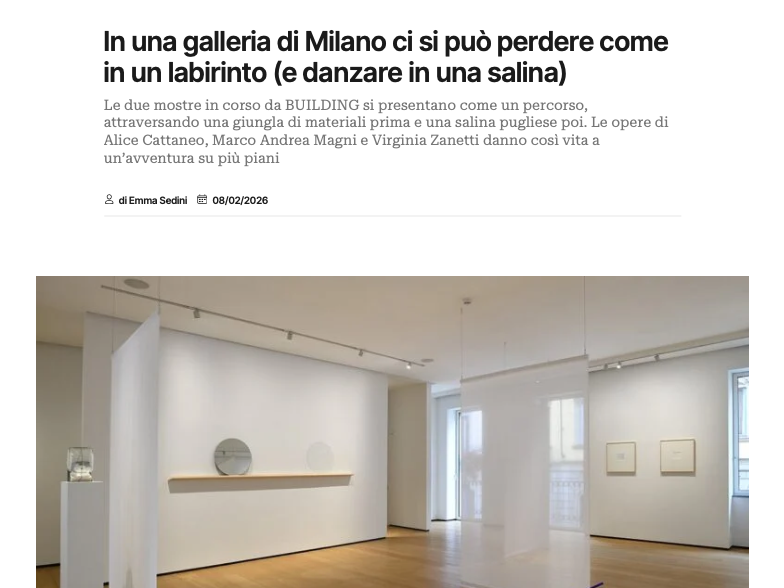
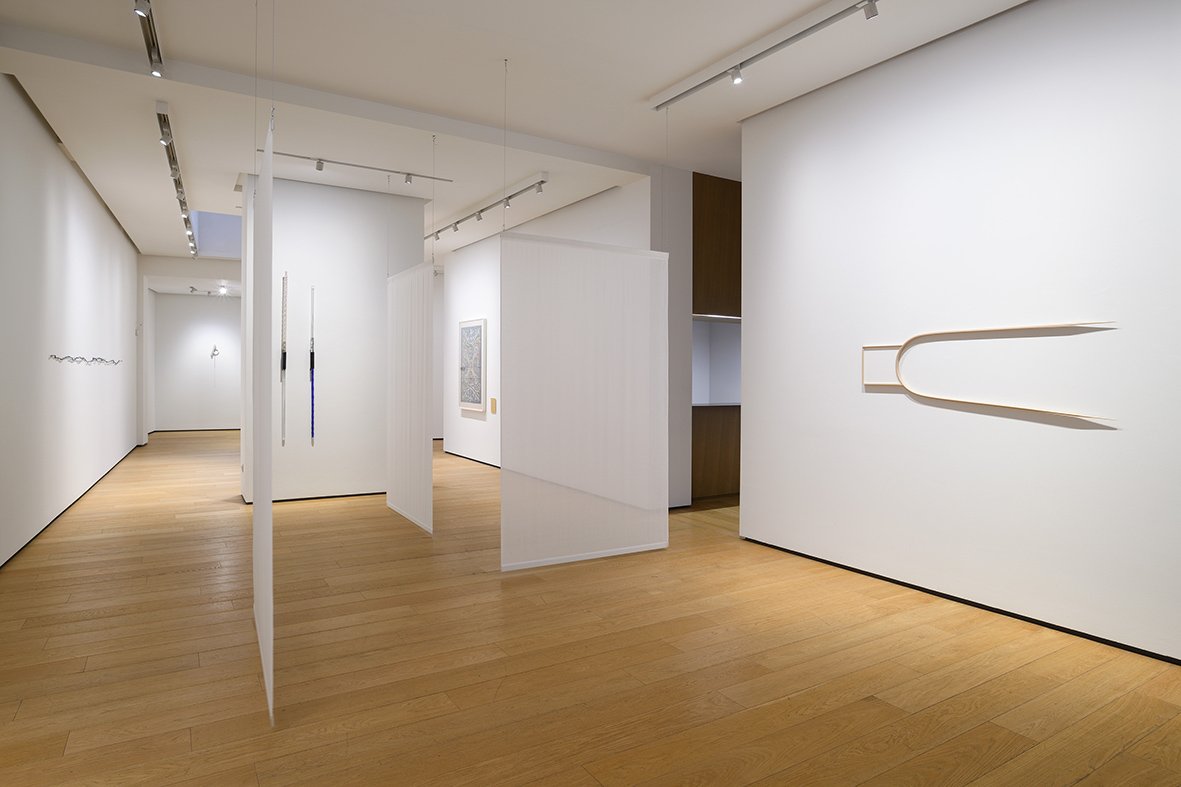
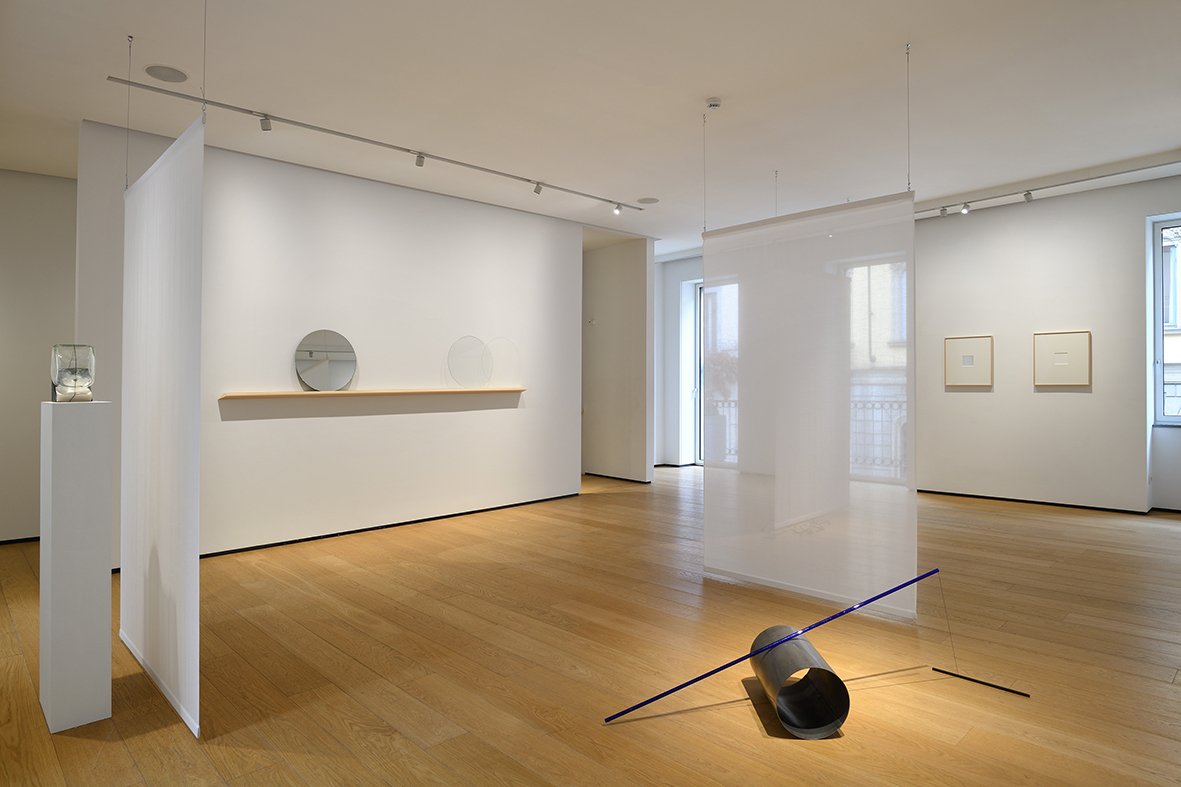
Un mondo tutto all’aperto has been constructed based on forms of coexistence between two artistic research projects and the space that hosts them, working in contact with a certain degree of opacity linked to mutual knowledge. This has also translated into specific exhibition design choices, whereby the BUILDING exhibition space features a number of fabric modules that can be interpreted as devices capable of altering the relationship with the exhibition environments. From a simple gesture, echoed in some of the works, a shared way of reinterpreting the gallery’s architecture was born: a structure that neither closes nor separates completely, but opens up new possibilities for orientation. A way of approaching, inviting passages, pauses, and dialogues, in which corners that draw the eye become instruments of relationship. Balance, invisibility, and presence are three different but resonant words that can create points of connection between the two artistic research projects. Alice Cattaneo focuses on a material, ideal, and perceptive tension, while Marco Andrea Magni situates the idea of invisibility in the epistemology of what surrounds us. Opacity is therefore included and considered part of an open world, a force that compels thought to activate itself, becoming a posture of relationship with space and an object of reflection for anyone experiencing the exhibition. Thus, discovering that behind every form of opacity lie nodes of sculptural intensity.
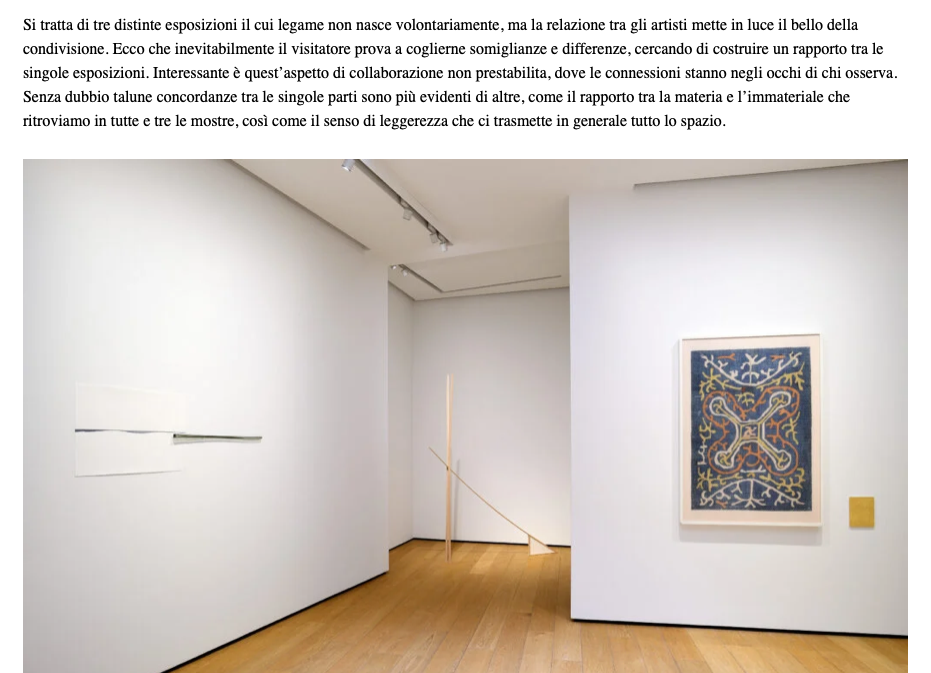
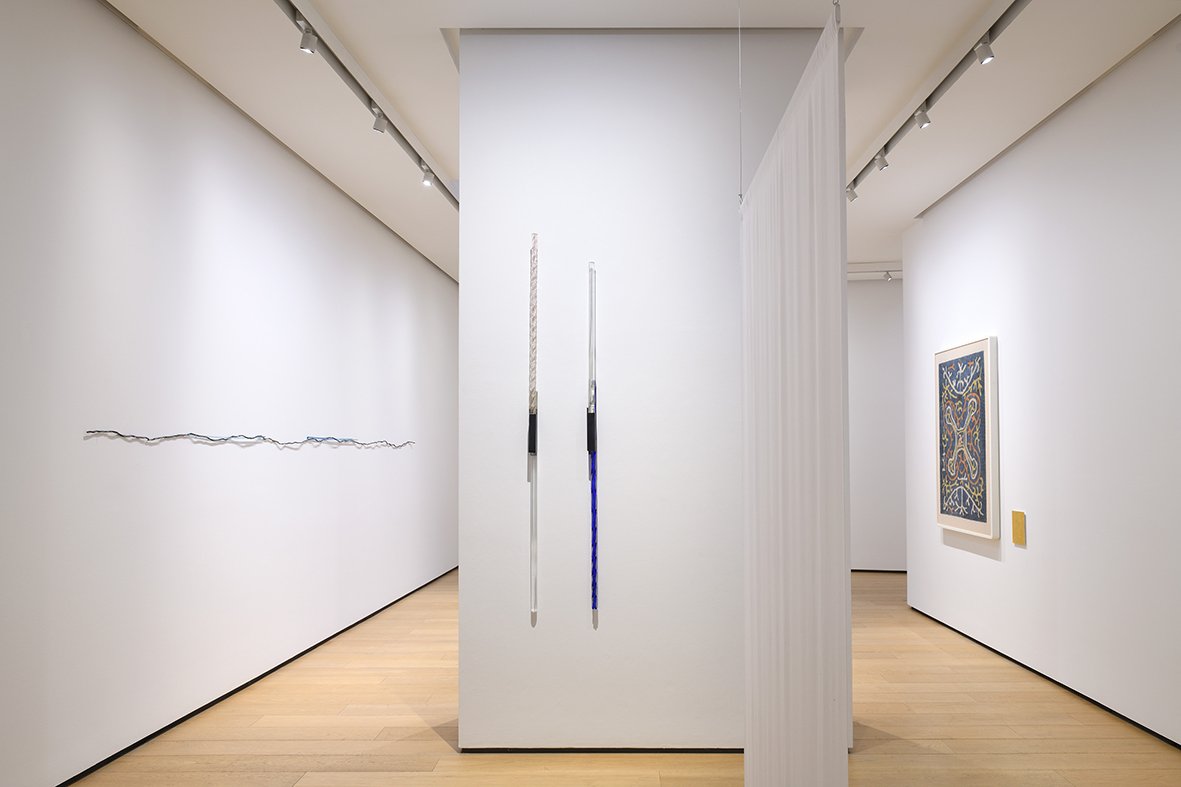
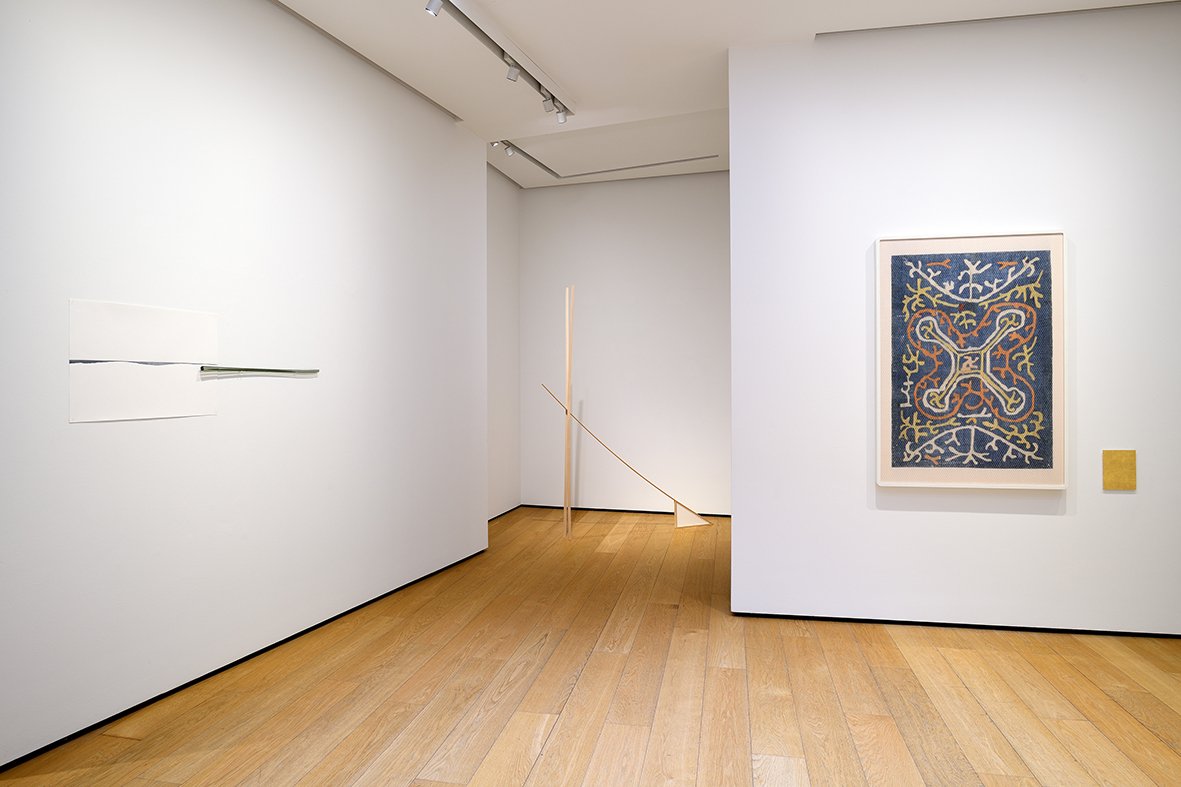
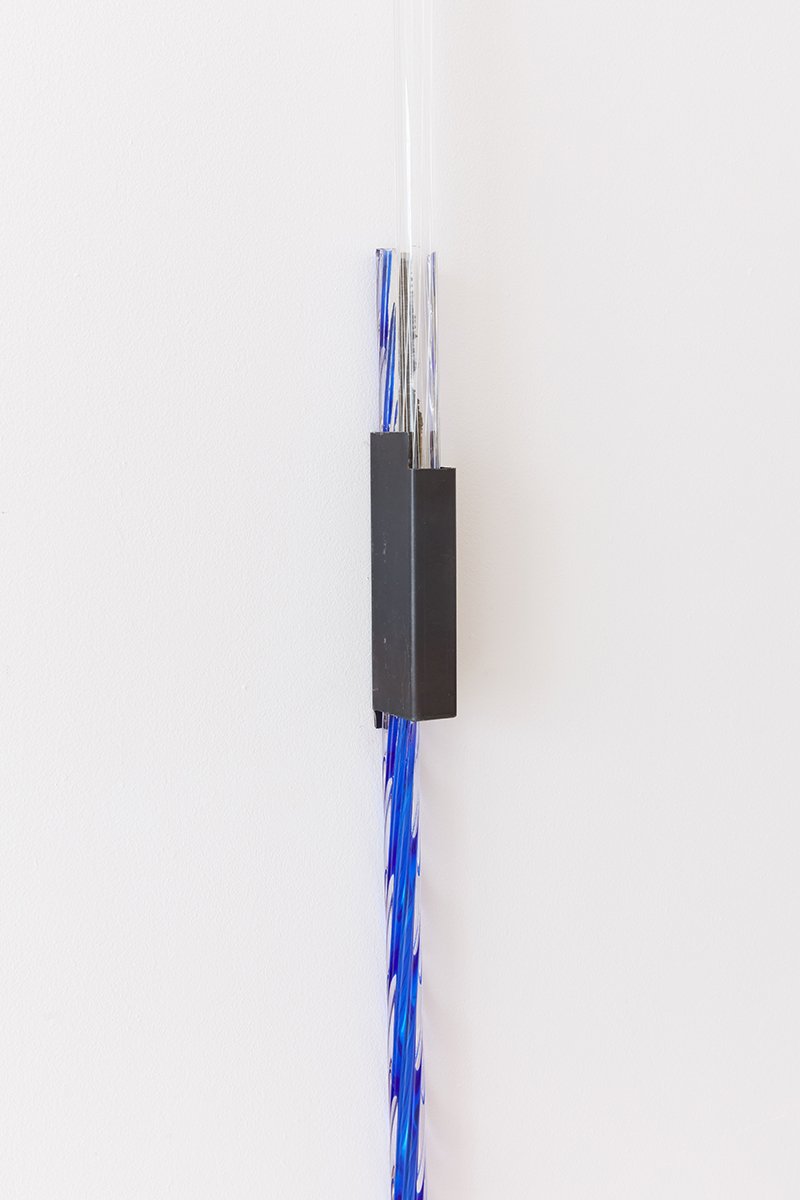
The exhibition opens on the ground floor with the interaction of pairs of works, referring to an “open space” rich in cracks, perspectives, and slopes. The first are two versions of Ruffiani (2025) by Marco Andrea Magni, in which wooden slats seem to escape the definition of a frame; alongside them are two Untitled (2019) works by Alice Cattaneo, in which four different Murano glass elements are joined by a cement grip and inserted into a small iron form that supports them vertically. From their opacity, these pairs of works lead the viewer towards a first encounter with openness: Untitled mark vertical lines of demarcation in space, as if the material were able to open a glimmer of light between two different dimensions; Ruffiani, on the other hand, amplify the transformations of a given perimeter, favoring a new type of vision beyond the boundaries of the image itself. In the exhibition, transparency and its opposite coexist continuously both in the works and in the rooms: from an initial space charged with atmosphere, we move on to a clear environment, where the tension of the exhibition is maintained by the works on display. This movement is guided by Quasi mattina (2026) by Alice Cattaneo, a composition of lead lines embracing colored glass rods, creating evanescent presences made of shadow. We then encounter Cosmografia (fumo) (2024) and Cosmografia (ametista) (2024), a pair of works in which Cattaneo has synthesized forms of sculptural emanation from two-dimensional to three-dimensional thanks to the energy of a furnace’s fire.
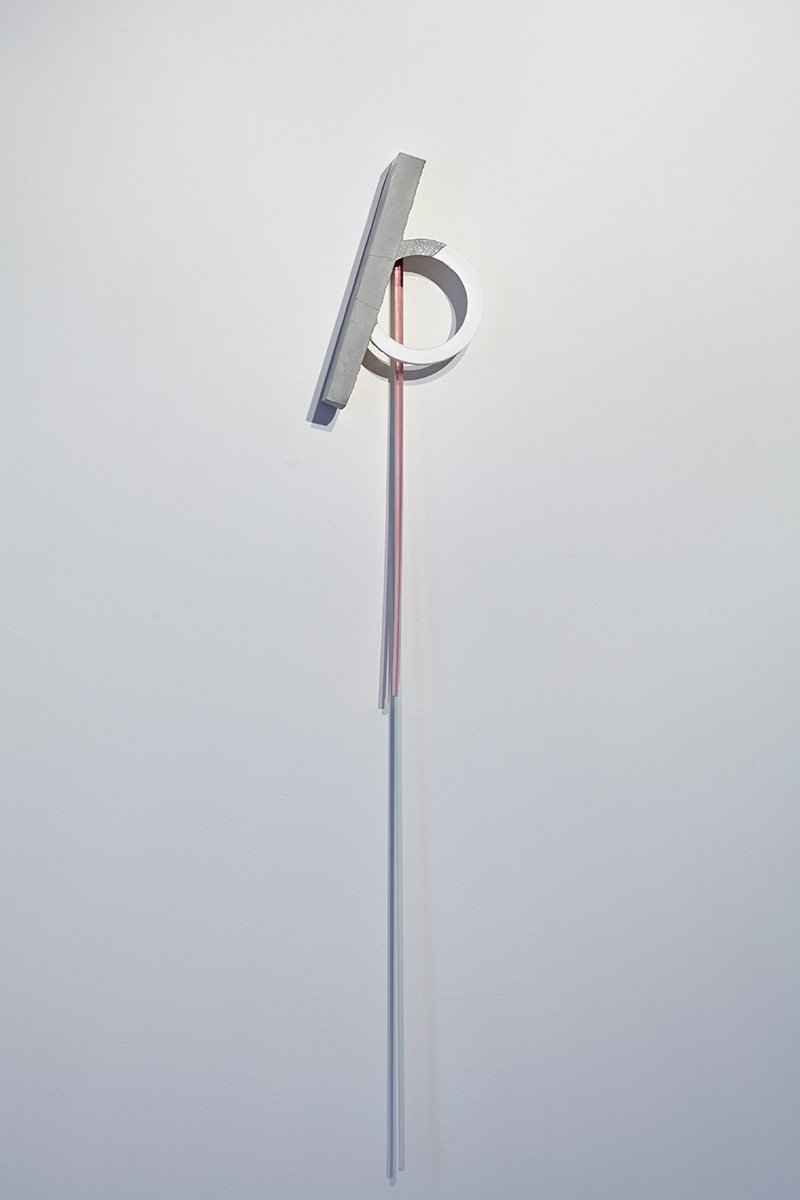
On the ground floor of BUILDING GALLERY, the works maintain a dialogue in suspension, without ever exhausting each other. It is a recurring concept: accepting the opacity and openness of the world means recognizing every potential multiplicity, valuing every small difference. In the case of the surface of Millebolle (2025), it is possible to read the fulfillment of a material’s original destiny. Bubble wrap, in fact, was born as an ancient alternative to wallpaper, transparent and ephemeral. A texture that preserves the memory of embroidery, a repeated motif that can envelop a space and transform it. Inside the niches at the ends of the ground floor, two other works are installed, poles of a final hidden and almost magnetic tension. In one, Untitled (2018) by Alice Cattaneo, in the other, the third example of Ruffiani (2025) by Marco Andrea Magni. Opposite works, very different from each other but which manage to express the same profound care in the choice of materials. The two form a suspended punctuation mark: on one side, a concrete form containing a porcelain circle, pink glass filigree, and a line of fiberglass; on the other, a new exploration made of transparent glass, passe-partout, and frame wood. Two marginal thoughts that find their dimension within a more intimate space and become protagonists, managing to look at the rest of the world “under the eyes of others.”
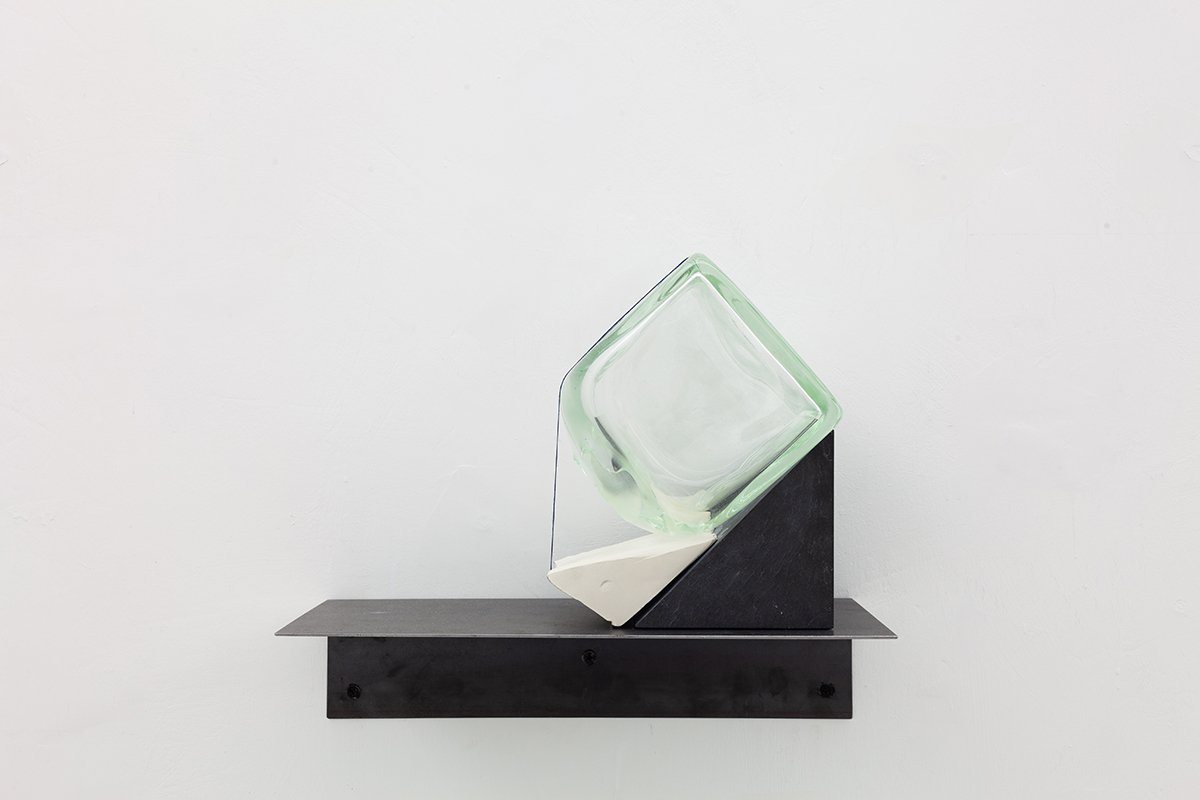
While on the ground floor of the gallery lines and directions seem to connect many of the works on display, on the first floor the folding and the assembling can be recognized as basic actions of construction, not only sculptural but also of the meaning. The selected works are generated by simple gestures, actions that create temporary static balances that seem to tend towards eternity. In a more intimate setting, opacity is cumbersome but more rarefied. In fact, when viewed with a different awareness, the works on display reveal themselves in their entirety, not unlike the niches on the ground floor. Complice (2025) by Marco Andrea Magni offers itself as a small treatise on coexistence: a double sheet made of paper and lead that, during its exhibition life, will also record the slightest variations in the space around it. Similarly, the two circular sheets of transparent glass, together with the single sheet of mirror that make up Ottica (2025) – another work by Magni – express themselves through a horizontal stratification and succession in which the opposing qualities of the materials contaminate each other. Together, they support the theme of contact, which until now had only been hinted at in the exhibition. The relationship between the two artists can also be traced in the interplay between simultaneity and isolation, whereby other works by Alice Cattaneo can be discovered beyond the fabric modules: Untitled (2018) on the floor and Untitled (2019) on a base. Although they do not have a specific title that defines them, both find a first form of completeness simply in the presentation of the materials they are made of: Murano blown glass, slate, ceramics, cotton thread, and iron are elements already present in other works on display, assembled this time with confidence in the possibility of a balance between the weights and inconsistencies of the materials. They represent bodies or parts of them, knots that are created between making and unmaking, similar to landscapes that remain impressed and recall the open to what is closed, as in the case of Sottosopra (2025) by Marco Andrea Magni. The two Lo spazio punto (2016-2025) works function in a different way, generated by the absence of contact and based on the invisibility of an action, made up of tension and measure, in which small gold-plated nails find their position on glass, suspended by the force of hidden magnets, pricking without piercing.
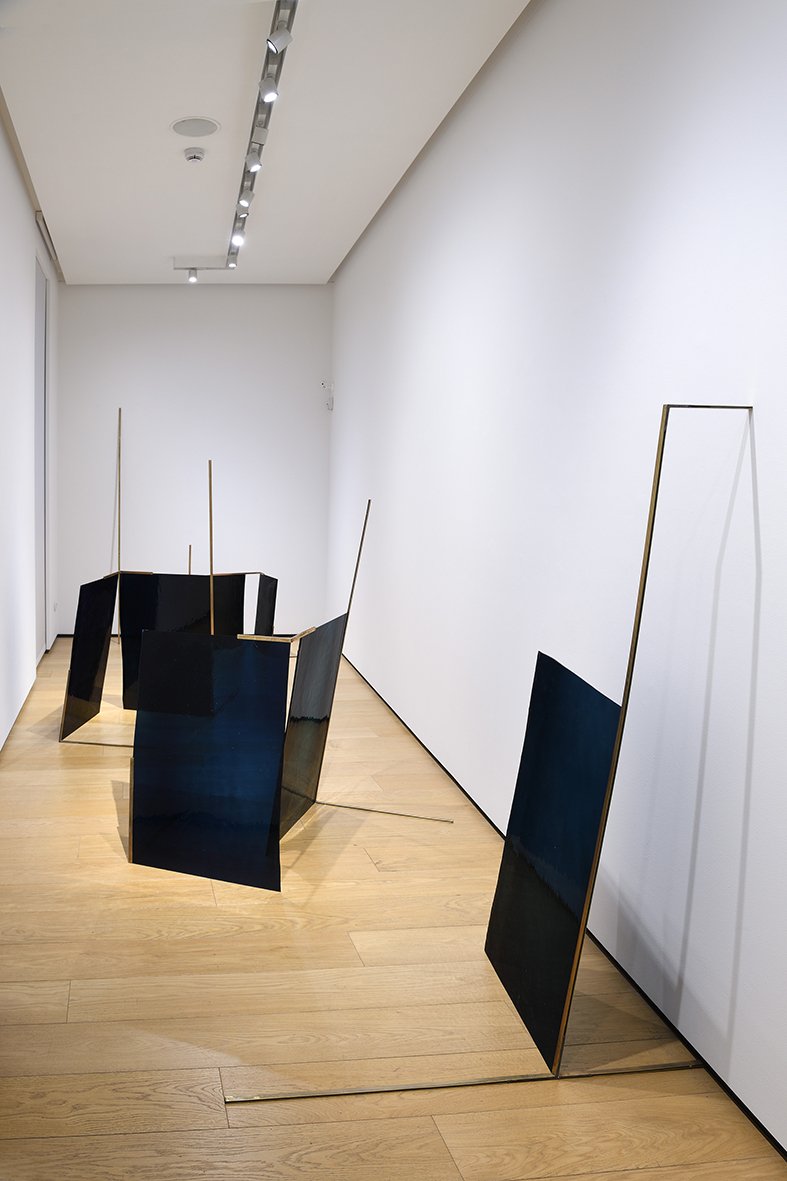
In the last room, Alice Cattaneo‘s Densità particolare (2026) finds its place, concluding the exhibition with a foggy nighttime image that draws in a void that becomes a work of art. Dark blown glass plates are assembled using brass elements with a now familiar lead core. At this point, the viewer’s eyes are filled with a physical sensation of opacity, just as when they are opened in the middle of the night. The eyes seem to adapt, discerning the contours of things and the surrounding space. The balance is always partial, everything is full and empty at the same time, despite being in a world that is always completely open.
Artisti
Press