Fabrizio Cotognini. Divino Dialogare – Casa Natale di Raffaello, Urbino
13.12.2025 – 01.02.2026
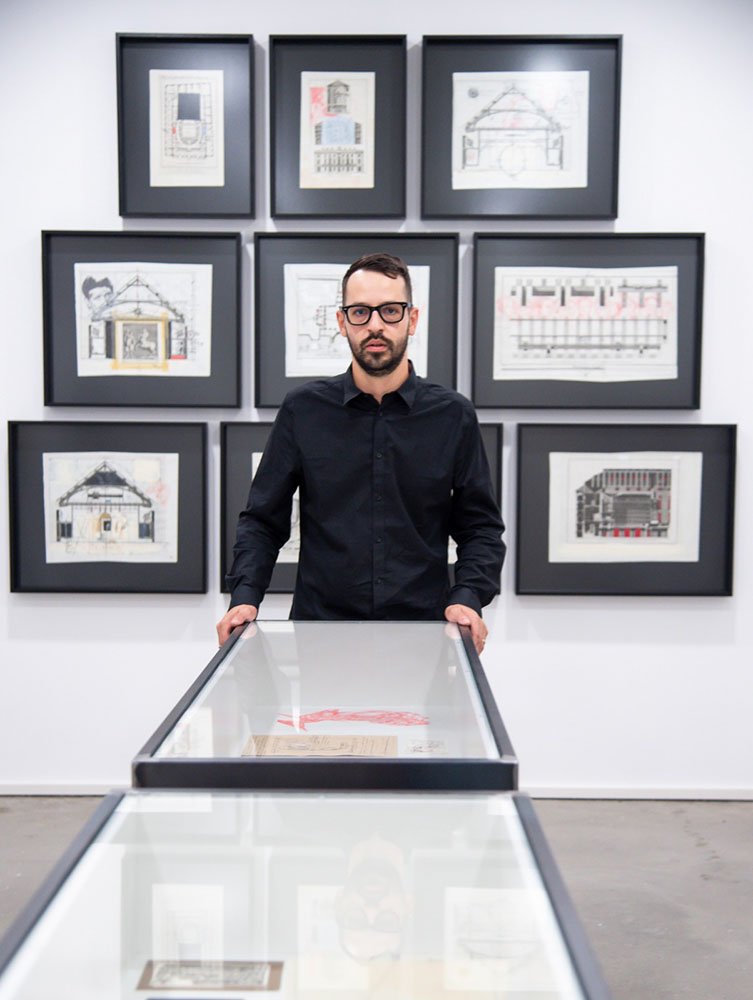
From December 13th, 2025 to February 1st, 2026, Casa Natale di Raffaello – Bottega Giovanni Santi in Urbino will host Divino Dialogare, a solo exhibition by Fabrizio Cotognini (Macerata, 1983), curated by Umberto Palestini. The exhibition is conceived as an unprecedented dialogue with the “lingering shadow” of Raphael Sanzio (Urbino, 1483 – Rome, 1520), presenting a selection of 27 works including engravings, drawings and casts created specifically for the exhibition.
Divino Dialogare is organised in collaboration with BUILDING, Milan, a contemporary art gallery that represents the artist, which has recently presented the solo exhibition Transitum (3rd April 2025 – 19th July 2025, curated by Marina Dacci) across three exhibition venues in Milan: BUILDING GALLERY, Gallery Moshe Tabibnia (03.04.2025 – 05.07.2025) and Museo Bagatti Valsecchi (20.06.2025 – 14.09.2025).
Moreover, the exhibition features a collaboration with Arti Grafiche della Torre (Casinina, PU) for the production of a limited-edition publication of a refined leporello that will accompany the exhibition.
Curatorial text by Umberto Palestini
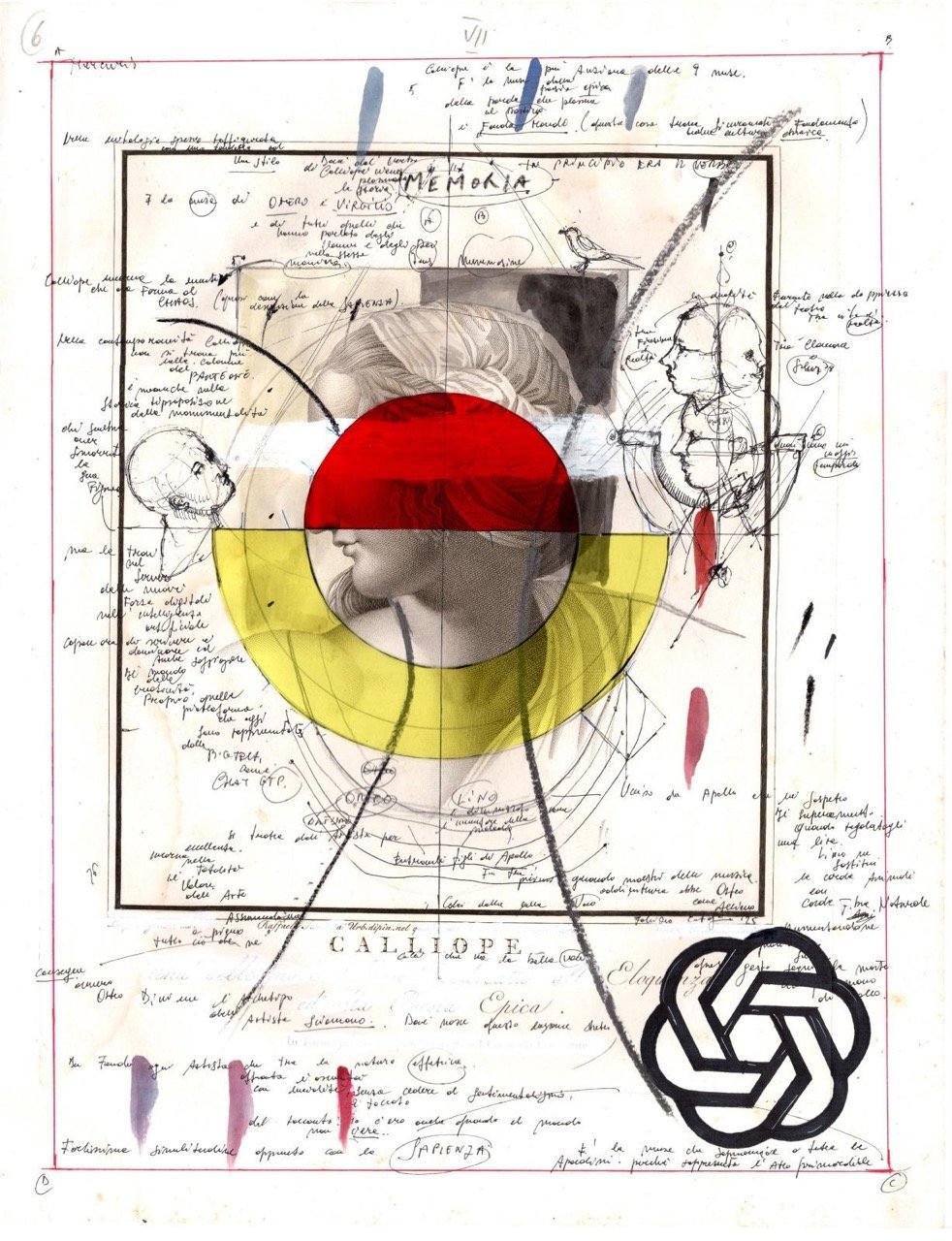
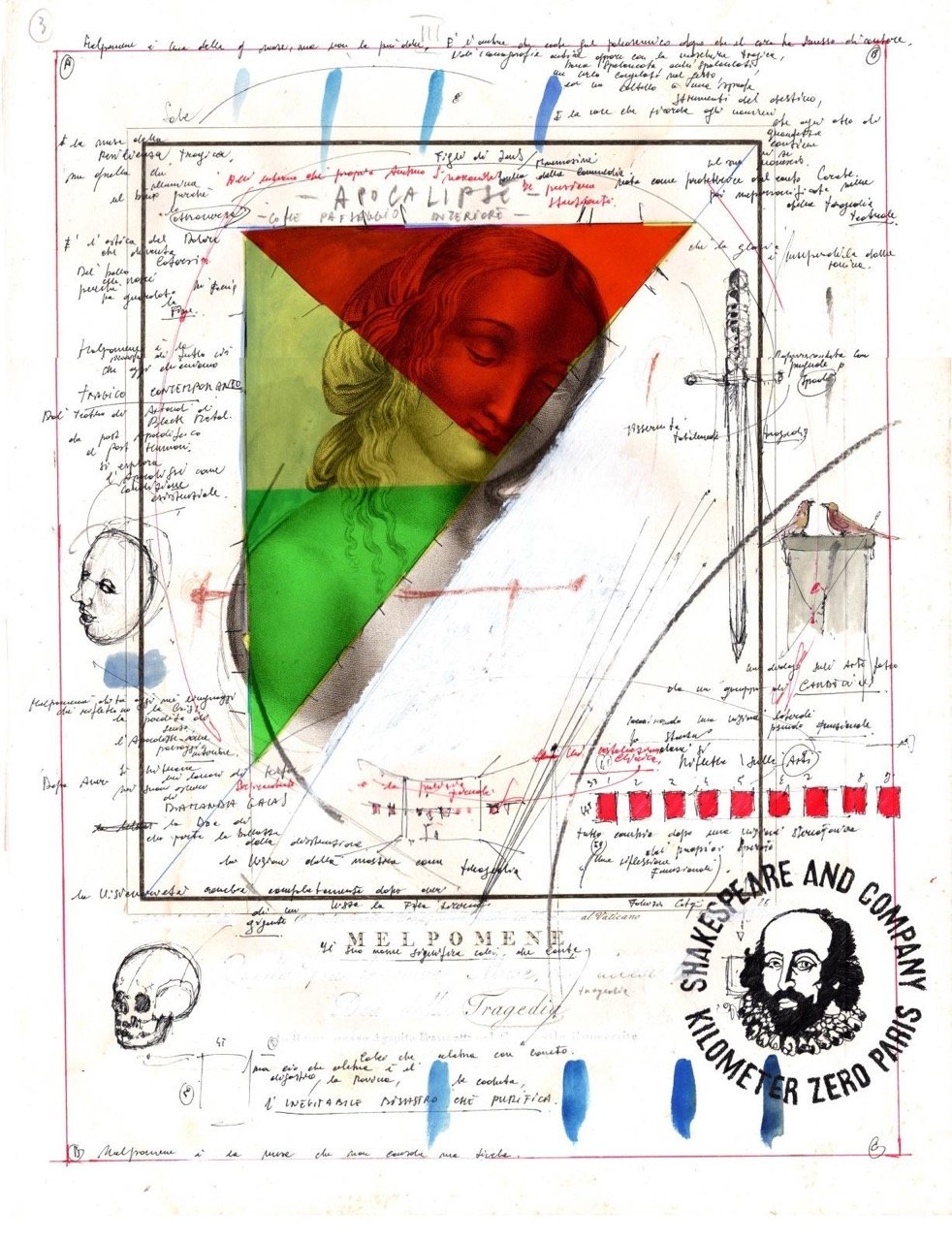
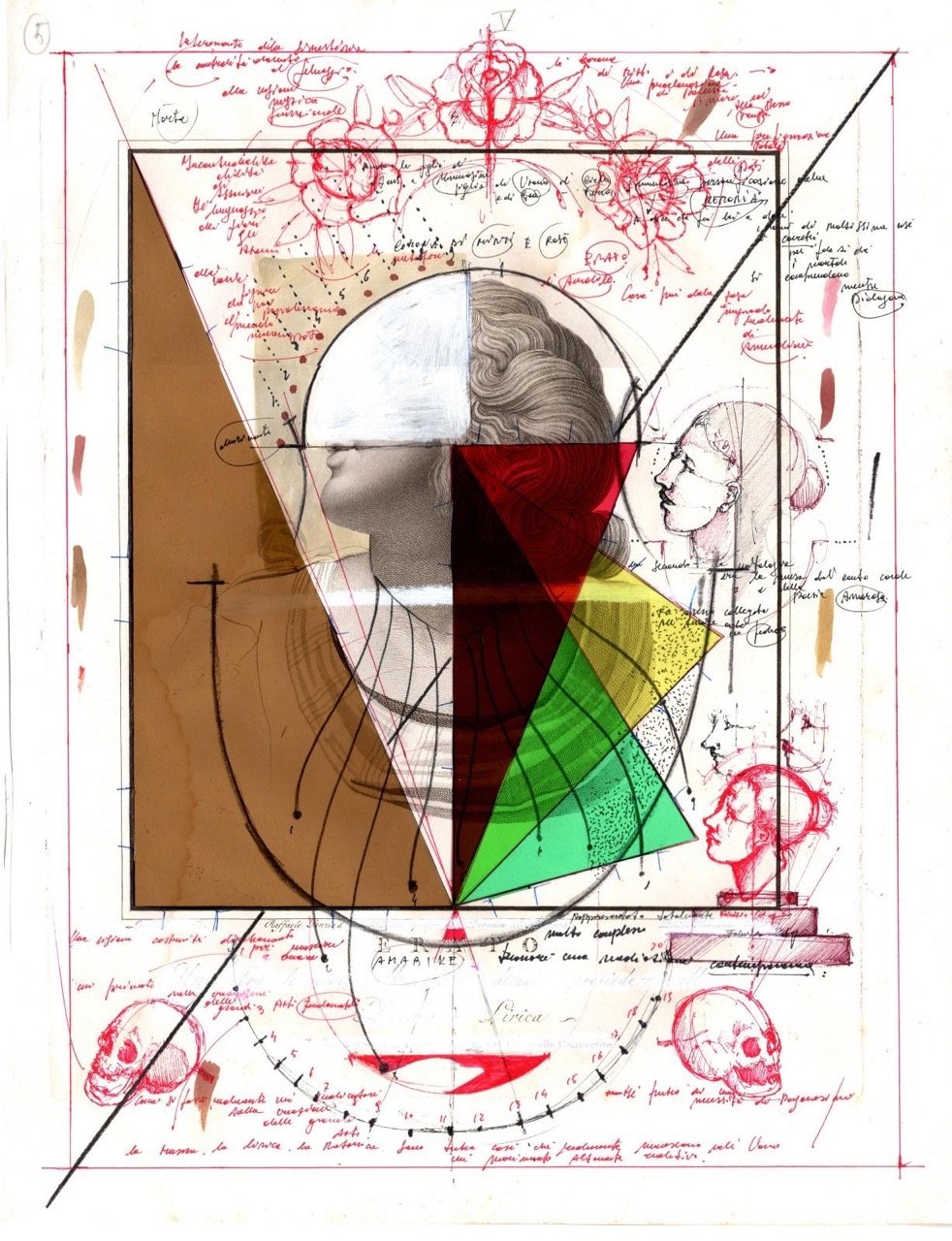
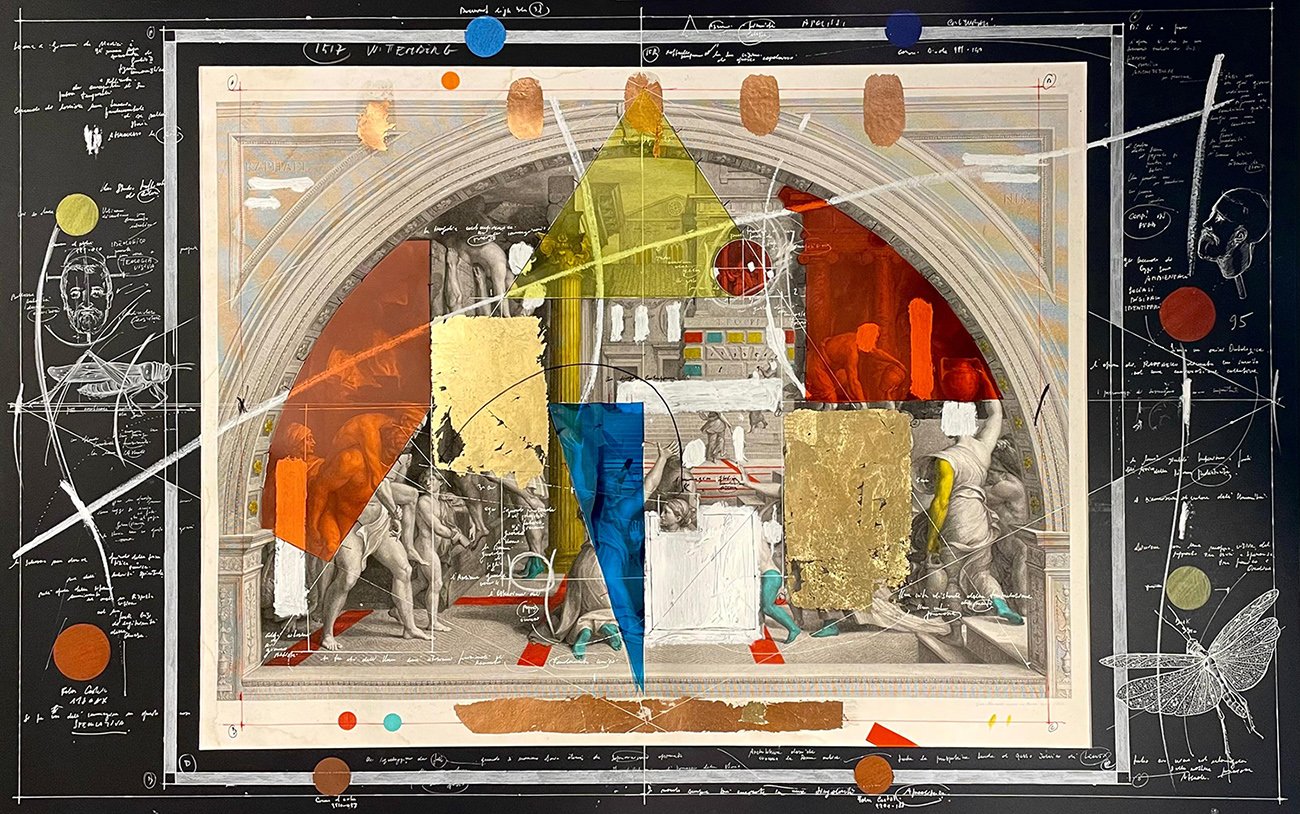
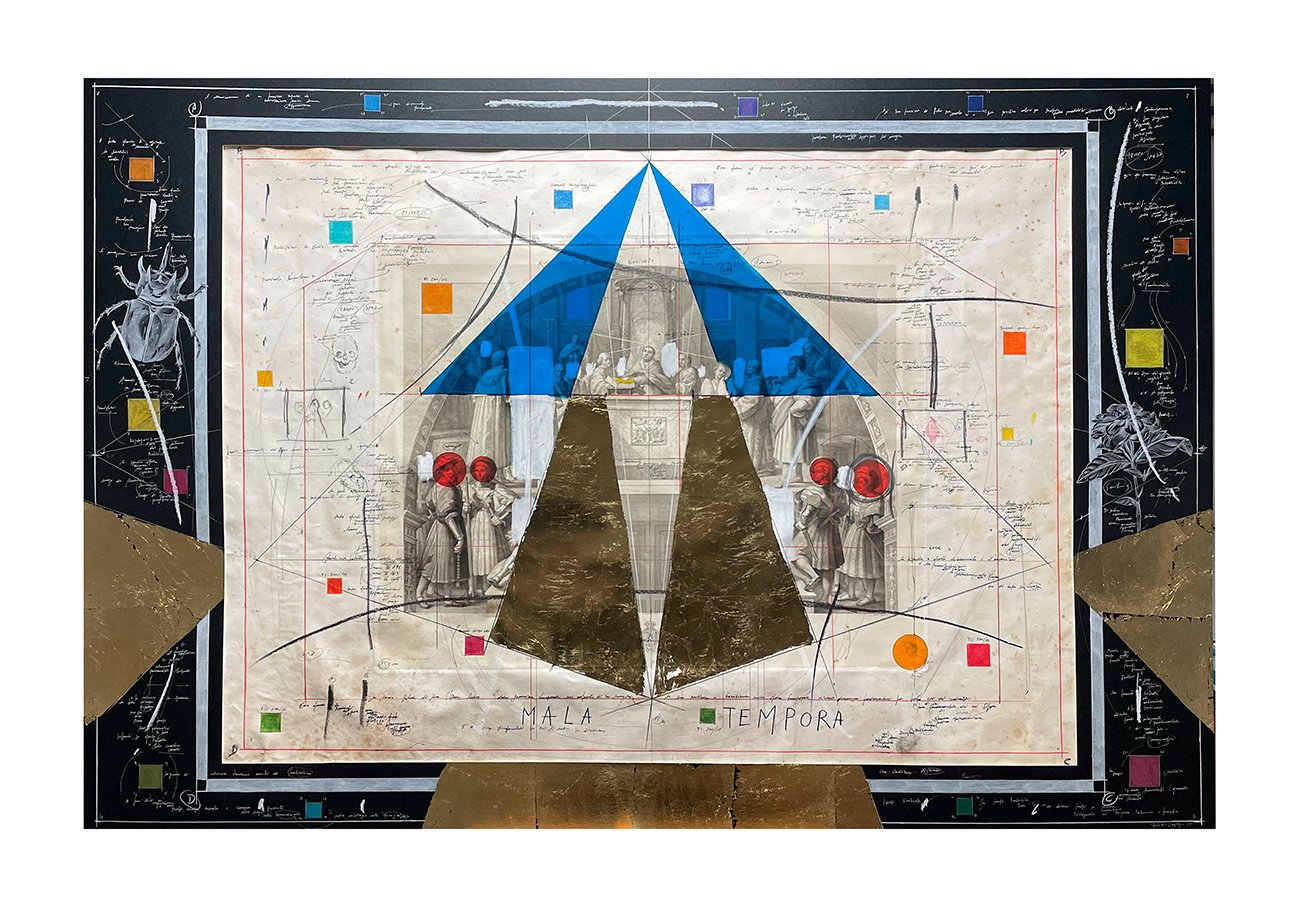
Fabrizio Cotognini is a composer, an artist-composer who develops a refined expressive language with musical accents, inscribed in a dual perspective. The approach adopted for his new solo exhibition, Divino Dialogare, focuses on the search for large and precious engravings linked to Raphael’s universal works, such as The School of Athens (1509-1511 ca.), The Fire in Borgo (1514), The Death of Ananias (1515-1516), The Coronation of Leo III (1517), and Self-Portrait with a Friend (1518-1520), translated by superb masters of the burin, Giovanni Volpato (Angarano, 1735 – Roma, 1803) and Raffaello Morghen (Portici, 1758 – Firenze, 1833), as well as on finding rare book editions from which he extracts poetic reproductions of the Muses of Parnassus. The valuable finds, recovered with constant passion, become palettes for Cotognini, elements on which he intervenes to make new chords resonate.
He creates original sensory devices that produce new visual “sounds” thanks to the tools of erasure and highlighting. In the first case, the pure white or elegant reflections of precious gold leaf mask portions of images shrouded in evocative mystery, without suffering the offence of brutal negation. In the second, theatrical gelatine cut-outs are used as optical filters to highlight details, illuminating elements that deny the hidden in order to be brought to light.
This process rejects any antiquarian view of Cotognini’s work, bringing it into the fertile realm of narratives, cloaked in a conceptual gaze where history dialogues with contemporaneity. The basic material – the sheets of engravings – is enriched with writing that precipitates around the images like margin notes, records from erudite research in dialogue with the origin and not with the simple past. Without forgetting the precious drawings, revealing the artist’s superb hand, conceived as source images and inscribed within rigorous geometric grids in constant dialogue like musical scores.
Cotognini’s recent works, while remaining within the established framework of his artistic research, reveal a particular sensibility, as they were created for the Bottega Giovanni Santi in Raphael’s birthplace, the legendary place where Raphael began his artistic apprenticeship as a child: they become devices, time machines designed to overcome the constraints of time, like many of the divine Master’s creations. It is enough to think of The School of Athens, an eternal masterpiece where ancient philosophers appear alongside artists and other figures contemporary to the great artist from Urbino.
The works, built on engraved bases, are intellectual puzzles whose solution requires active participation on the part of the viewer in order to decipher their varied references. They are not finished works in themselves, but devices that activate different meanings; open and layered works that offer the balm and driving force of multiplicity in a time of prevailing conformism.
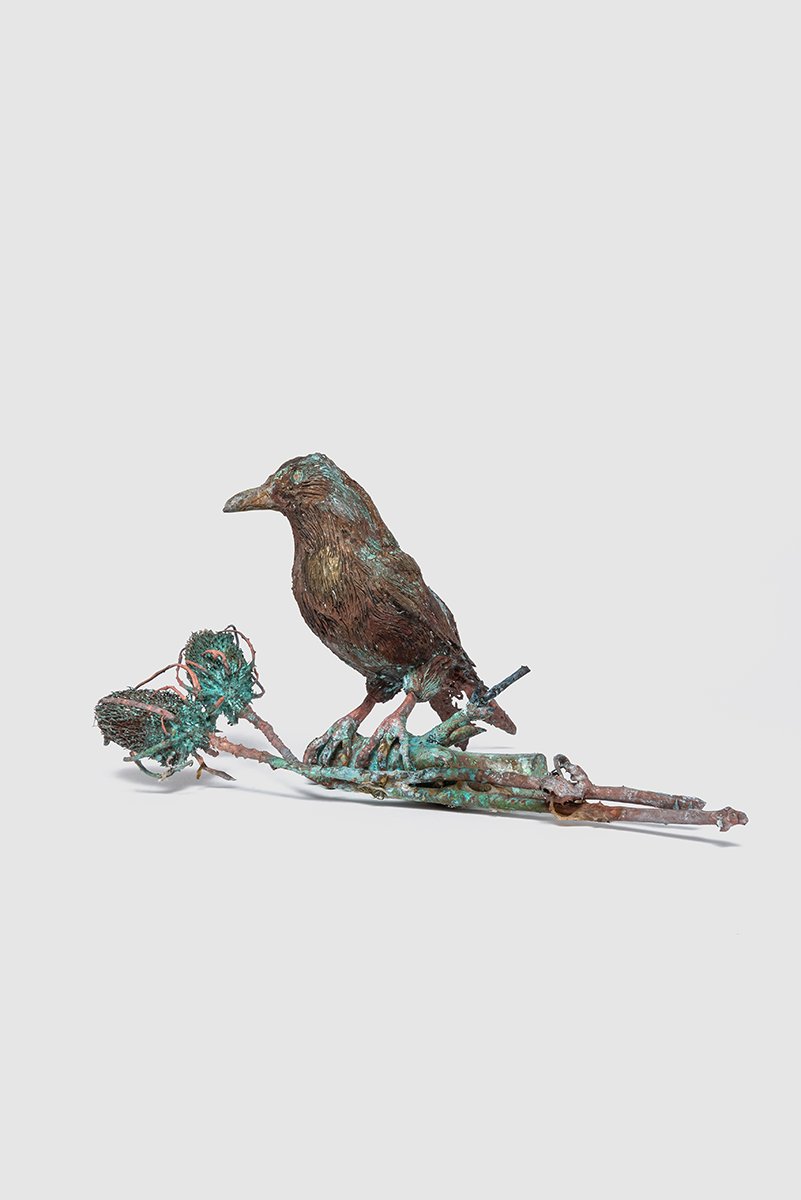
As a further tribute to Raphael, recalling the Madonna of the Goldfinch, Cotognini also brings two sculptural installations to the house: a group of Hybridatio Mundi – bronze birds perched on a railing – and a skull with a bird in its mouth, in memory of the enigma linked to the cast of the Master’s skull.
Engravings, drawings, castings, patinas, gilding, plastics and marble are the diverse materials skilfully orchestrated by Cotognini to create a richly varied polyphony while maintaining a rigorous conceptual order. The artist’s complex visual architecture weaves a fertile dialogue with the lingering shadow of Raphael: a heartfelt tribute to the fundamental nature of art that transcends time and renews its splendour only thanks to the hands and minds of those who know how to listen to it. Cotognini has understood the lesson and faces the challenge by developing a language capable of giving voice to a divine dialogue.
Text by Luigi Bravi, President of the Accademia Raffaello
The work of Fabrizio Cotognini, gathered here in the exhibition Divino Dialogare curated by Umberto Palestini, evokes a twofold sensation. On the one hand, we perceive and appreciate Cotognini’s ability to enter the network of ancient signs with the forms and colours of today, engaging in a dialogue between “colleagues” that remains possible even after centuries. On the other hand, we understand that, for a provocation to be effective, it requires a shared reference point: the classical excellence of a Master who, in this comparison, loses nothing of his greatness and divinity. Divino Dialogare thus finds a fitting place in the sacred spaces of Raphael’s early training, amplifying the mission of the Casa di Raffaello—guardian of the myth— in today’s most select and refined form.
Mostre

Artisti