Per filo e per segno. Percorsi di arte tessile in Italia
15.01.2026 – 07.01.2027
From January 15th 2026 to January 6th, 2027, BUILDING BOX presents Per filo e per segno. Percorsi di arte tessile in Italia, an exhibition project curated by Alberto Fiz involving twelve Italian artists from different generations, invited to reflect on the theme of contemporary textiles. Throughout 2026, the exhibition will offer a selection of tapestries, clothing, installations, sculptures and site-specific works, in twelve individual monthly installations. The first three artists presented are: Numero Cromatico (artistic collective founded in Rome, 2011), Paola Anziché (Milan, 1975) and Maurizio Donzelli (Brescia, 1958).
The last decade has been characterised by an increasing focus on textile art, which has established itself as one of the most vital languages of contemporary art. The reasons for this can be found, first and foremost, in its ability to restore a central role to the matter and the body in an era dominated by digital technology. Although the use of textiles is nothing new – just think of the fabrics of Fortunato Depero (1892-1960), the carpets of Giacomo Balla (1871-1958) or the tapestries of Alighiero Boetti (1940-1994) what has emerged is an unbiased, often provocative and transgressive process that has involved contemporary artists and, at the same time, has made it possible to highlight some central figures in art history, especially women, who have long been marginalised.
Furthermore, the uniqueness of textiles lies in how they have given rise to an autonomous language, with its own expressive matrix understood as a critical device capable of questioning all forms of hierarchy, according to a renewed awareness that can be traced back to the 2017 Venice Biennale, Viva Arte Viva, curated by Christine Macel, who had built her reflection starting precisely from textile art.
The exhibition project presented by BUILDING BOX aims to connect Italian artists from different generations by developing a fluid, all-encompassing journey that highlights the potential of a versatile, malleable and environmentally sustainable material, where tradition, memory and modernity intersect without rigid formalisation. At the same time, fibres, textures, knots and weaves become relational tools capable of redefining space and the relationship between individuals.
Per filo e per segno aims to make an innovative contribution to the debate on textile art, which on this occasion develops around different perspectives, offering a broader vision with the inclusion of a variety of works such as tapestries, clothing, installations, sculptures and site-specific works, many of which are new projects created specifically for this occasion, confirming how fabric is not only a technique but also an innovative approach to reality and image. Beyond the poetic and stylistic prerogatives, there is a unifying feature that can be traced throughout the exhibition, namely the intimate, in some ways autobiographical, aspect of the research, which is not without attention to the manual component, radically opposing the standardisation and dematerialisation of contemporary society. Per filo e per segno therefore aims to be a meticulous and detailed journey that contemplates the minimal unity of the textiles and the pattern that emerges when the threads are woven together. All this with the aim of generating a new plot through twelve chapters.
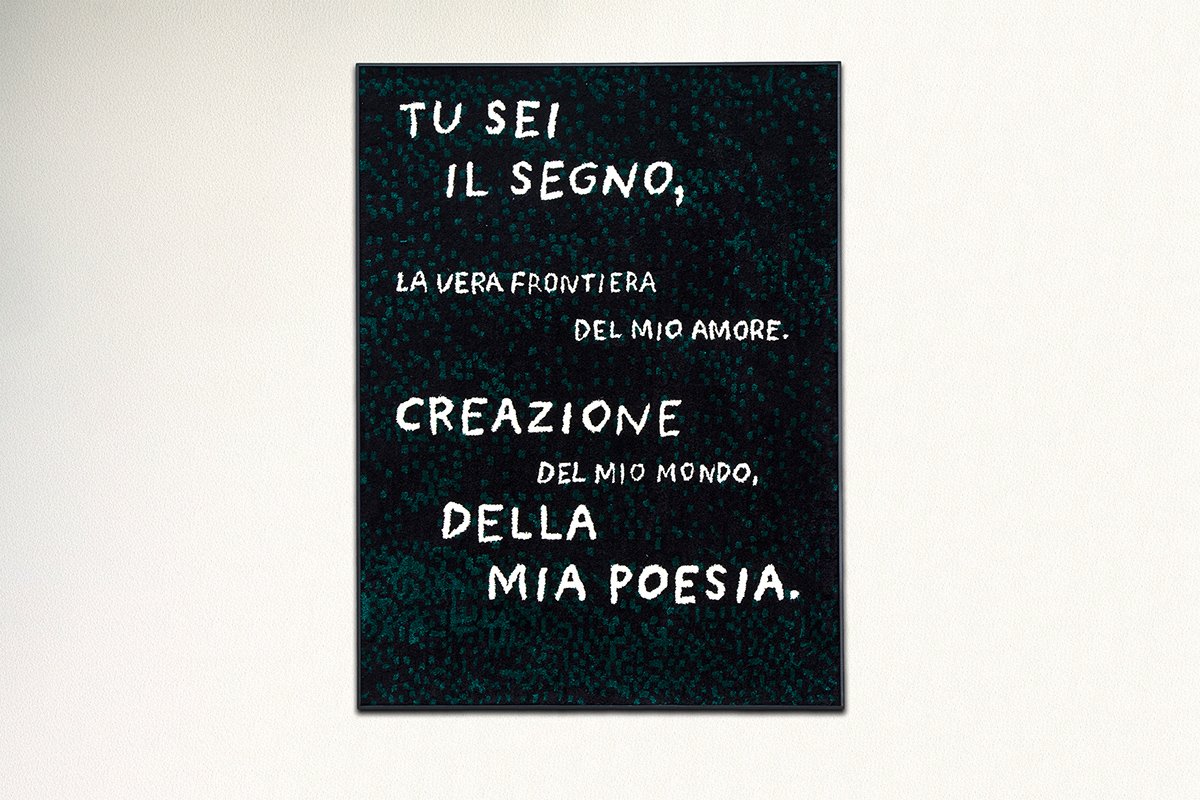
Per filo e per segno will be inaugurated on January 15th to February 11th, 2026 by Numero Cromatico, the artistic collective and multidisciplinary research centre founded in Rome in 2011, which works on one of the project’s fundamental themes: the redefinition of space. The new installation entitled Frontiera del mio amore (2025), created especially for the occasion, involves covering the walls with hand-sewn fabric that transforms the environment, creating an immersive experience. At the centre is a tapestry bearing the poem Tu sei il segno, la vera frontiera del mio amore. Creazione del mio mondo, della mia poesia taken from the anthology created with the help of artificial intelligence trained by Numero Cromatico to generate poems on the theme of love (I.L.Y., I Love You). The result is ambiguous content that the viewer can glimpse through a fabric curtain. Frontier, threshold, border are some of the aspects that characterize this necessarily relational work.
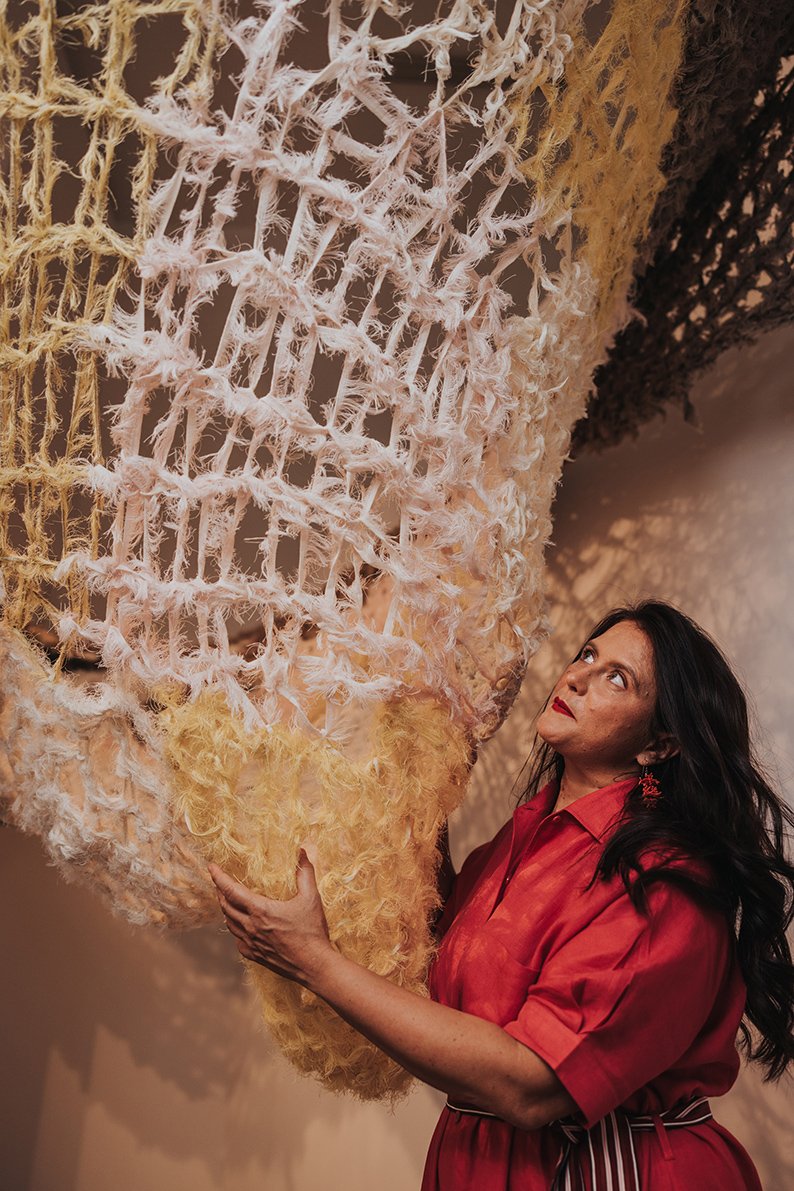
From the dialogue between computational aesthetics and bodily sensitivity, we move on to the visionary universe of Paola Anziché (Milan, 1975). From February 13th to March 11th, 2026, the second appointment presents the installation Imparando dalle Forme (Learning from Forms, 2019-2025), first created in 2019 and reworked for this occasion, which reveals the architectural scope of her works designed to create intimate and enveloping environments, blurring the distinction between public and private spheres. ‘A gesture in textile form’, as the artist states, giving life to circular, organic and floating elements that deny any monumentality. For Anziché, textiles become a tool for questioning the memory of manual skills, their ritual and communal dimension, designed to activate a sensory experience where the gesture arises from the materials.
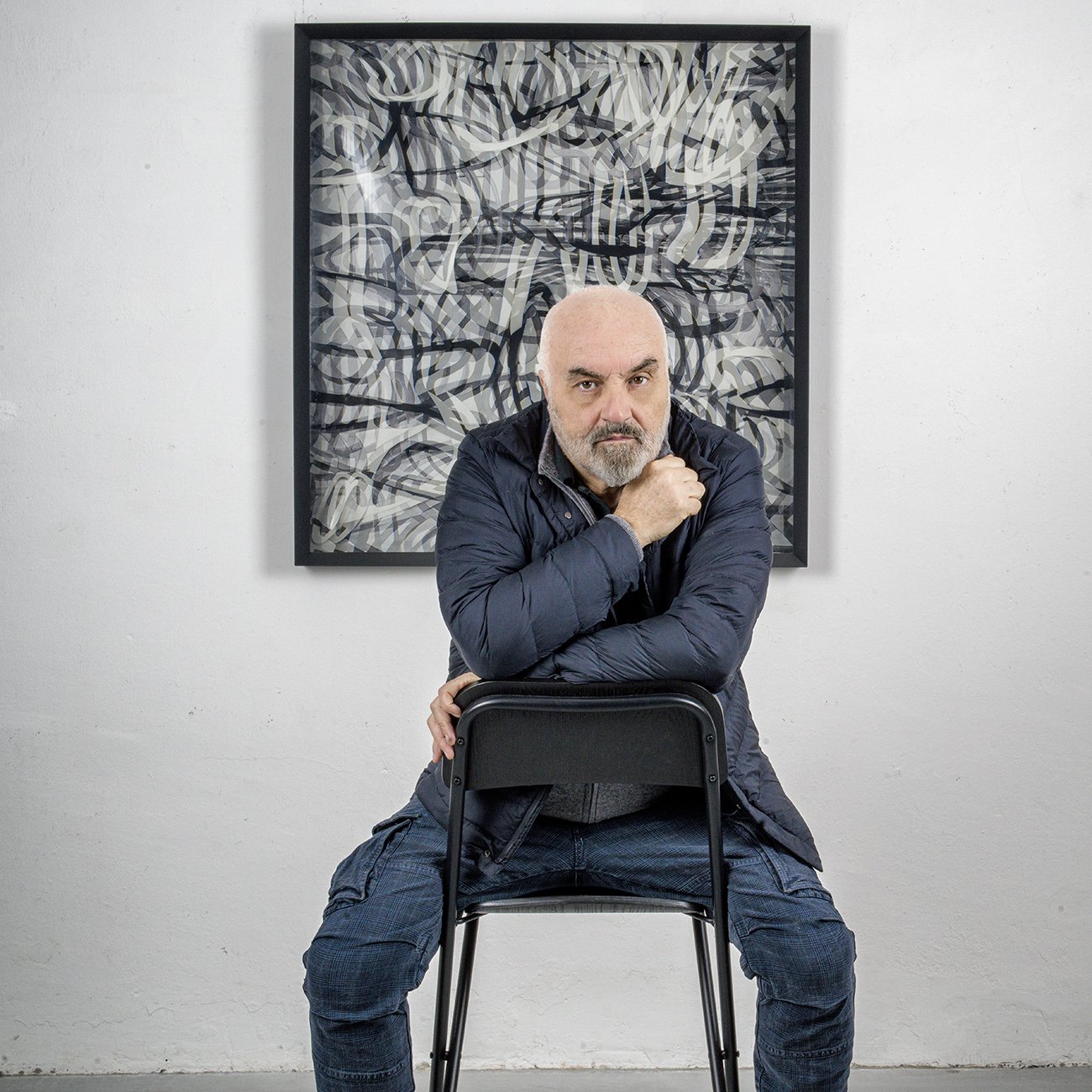
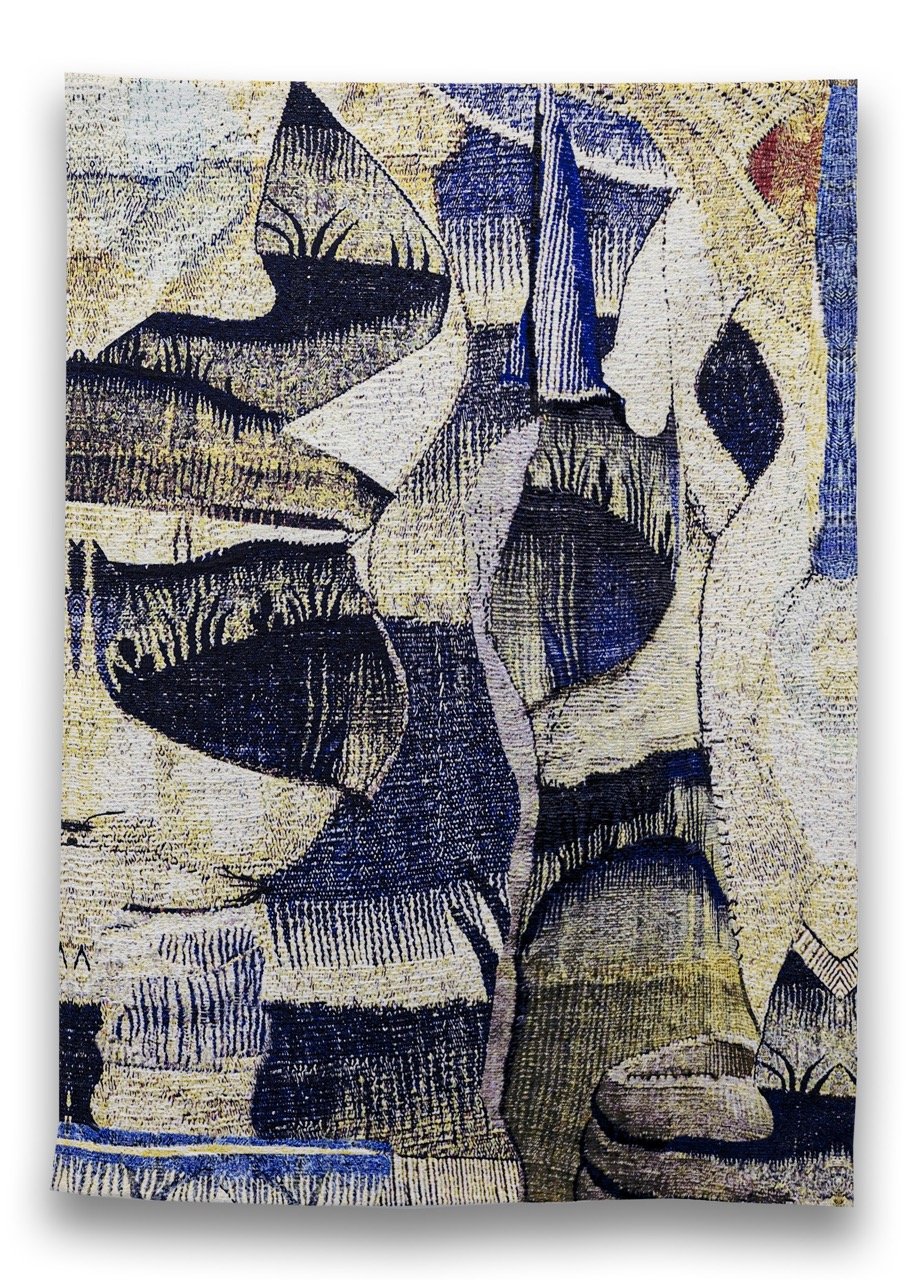
While tapestry symbolizes fabric par excellence in its most classic and recognised form, Maurizio Donzelli (Brescia, 1958) frees it from its traditional connotations. From March 13th to April 8th, 2026, in the windows of BUILDING BOX, the artist presents a new work in jacquard fabric created by superimposing two tapestries, definitively breaking with any narrative logic through continuous interference that leads to a fragmented and fragmentary vision. The reference point is Bramantino’s famous cycle on the Months (1503-1508) preserved at the Castello Sforzesco in Milan. Donzelli not only eliminates the figures, but also renders the details unrecognisable, forcing the viewer to question the image in front of them. It is precisely this doubt that constitutes a constant thread running through a work from which enigmatic forms emerge that do not accept the status quo and are continuously subjected to kaleidoscopic shifts.
Artisti